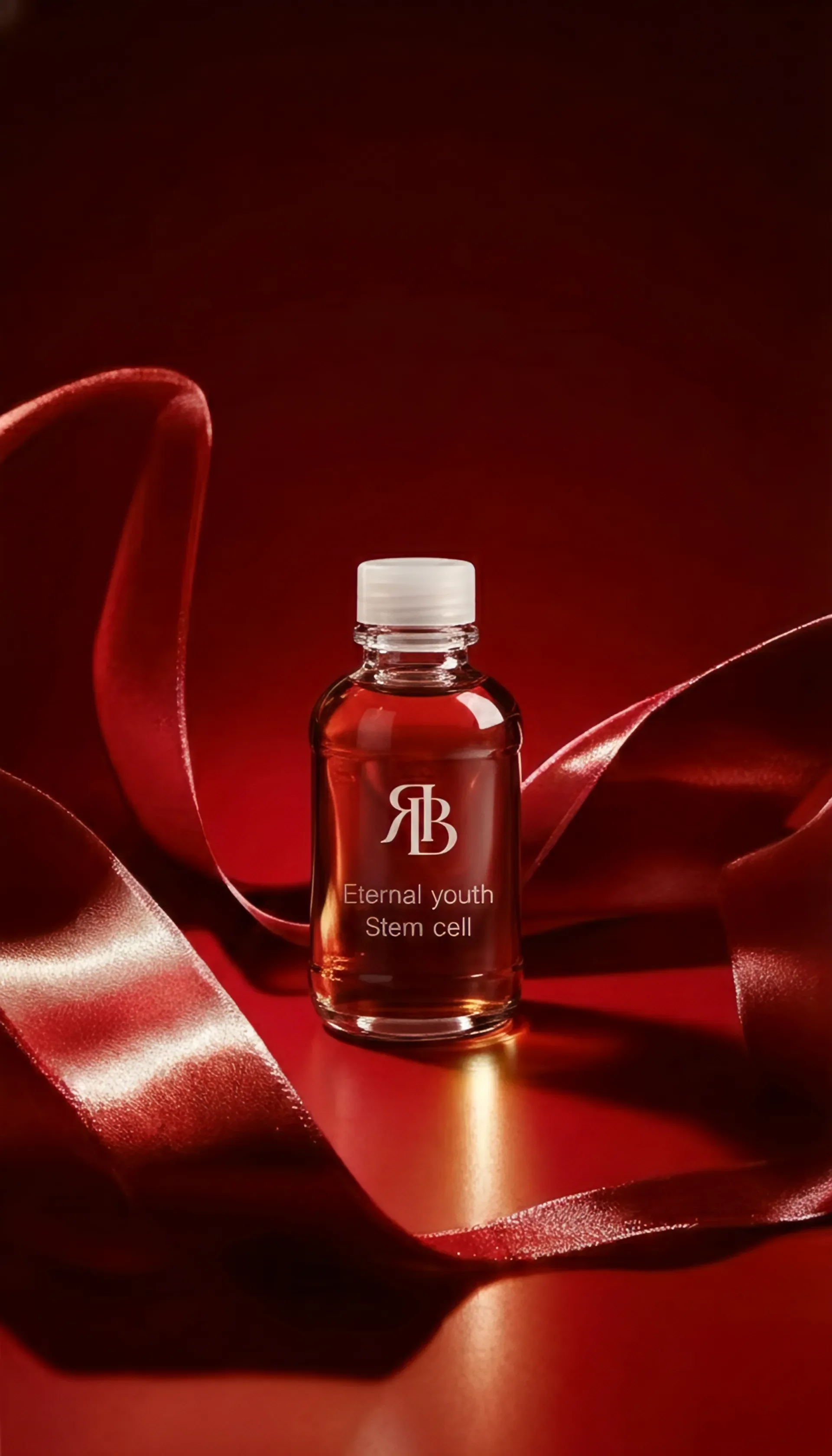
Treatment Guide
Stem cell treatment in Myeongdong
Exosome IV infusion plus microneedling delivery — the two-modality regenerative protocol that defines Myeongdong's tourist-accessible mid-tier clinics, read against the Korea Advanced Regenerative Medicine framework.
Myeongdong's regenerative scene runs on a quietly consistent grammar. You arrive — most readers of this archive arrive from Haneda, Narita, or Kansai on a morning flight — and check into a hotel within fifteen minutes' walk of the station. By early afternoon you are sitting in a fifth-floor consultation room above a Daiso, drinking yuja tea from a paper cup, and a coordinator is explaining, in serviceable Japanese, that the protocol the senior physician will recommend is an exosome IV infusion paired with two to three microneedling sessions across the trip. This is not Ultherapy. It is not MFU lifting. It is a separate category of regenerative medicine that the Korean clinical community has, over the past five years, converged around as the standard delivery format for cell-derived bio-active treatment. The mechanism is signalling, not transplantation: the exosomes — extracellular vesicles harvested from licensed Korean cell-processing facilities under MFDS oversight — carry a cargo of growth factors and microRNA that prompts your own resident cells to upregulate collagen and elastin synthesis, and the microneedling delivery puts the bio-active where it can act. The effect, in patients who respond well, reads as improved skin tone, refined texture, and a particular evenness across the cheek and jaw that Japanese magazine editors describe as 透明感 — translucency. The effect is real, gradual, and — and this is the editorial point I want to land — uneven across patients. Some respond markedly within four weeks; some respond more subtly across three months; a small minority do not respond clinically at all. A serious clinic discloses this distribution honestly. A tourist-trap clinic does not. The rest of this page is about telling the difference, against the regulatory framework Korea has built and within the geographic context of Myeongdong specifically.
What is actually administered: exosomes, not stem cells
I want to dwell on this because the terminology deserves precision. "Stem cell treatment" on a Myeongdong menu almost never means the injection of live, expanded stem cells into the dermis — that pathway exists in Korean regulatory medicine but runs through a different track, requires a different licence, and is not what the mid-tier aesthetic clinics in this district administer. What is administered is exosome infusion: extracellular vesicles, membrane-bound and roughly 30 to 150 nanometres in diameter, harvested from cell cultures (most commonly umbilical-cord mesenchymal stem cells in the allogeneic Korean products) and prepared as a sterile injectable. The vesicle carries the cell's secretome — its signalling cargo of proteins, lipids, microRNA — without carrying the cell itself. The clinical advantage is that you get the signal without the immunogenicity and regulatory burden of live-cell transplantation. The terminology is loose because Korean marketing has historically conflated the categories; the clinical content is more specific.
Two delivery modalities: IV and microneedling
The two-modality protocol that defines Myeongdong regenerative practice runs as follows. The intravenous infusion delivers exosomes systemically — a slow drip across thirty to forty-five minutes, typically in a recliner chair while the patient reads a phone — with the bio-active distributed via the bloodstream to the skin, hair follicles, and joints. The systemic effect is gentle and broad; patients describe a quality of skin glow that emerges across the week following infusion. The microneedling session delivers exosomes locally — through a motorised pen at needle depths of 0.5 to 2.0 millimetres, with the exosome serum applied topically before, during, and immediately after the channelling — and the local effect is more focused: the exosomes act in the papillary and reticular dermis where collagen synthesis happens. A first programme conventionally runs one IV plus two to three microneedling sessions, spaced across two to three weeks; a maintenance programme runs one of each every six months. Some clinics push longer cadences for a longer trip; others compress everything into a single seven-day visit. The senior physician should set the cadence based on skin response, not on the trip itinerary.
Allogeneic exosomes and the MFDS framework
The Ministry of Food and Drug Safety regulates exosome products as cell-derived biologics. The MFDS-approved allogeneic exosome products in current Korean practice — the formulations the mid-tier Myeongdong clinics actually administer — are sourced from licensed Korean cell-processing facilities operating under good manufacturing practice (GMP) standards, with batch tracking that allows post-market surveillance. The patient-facing detail to verify before consenting: ask the coordinator for the product name, the manufacturer, and the MFDS approval reference. A serious clinic will tell you without hesitation; a clinic that hesitates is telling you something. The Korea Advanced Regenerative Medicine framework — administered jointly by the Ministry of Health and Welfare and supported through KHIDI — provides the broader policy context for advanced bio-active therapies in Korea, including the regenerative medicine centre designation system that distinguishes clinics with documented regulatory engagement from clinics that simply purchase the product.
What clinical response looks like
I describe response in three tiers because the trade press tends to compress them into one. First tier: marked response within four weeks, characterised by visible improvement in skin tone and texture noticeable in flash photography. Roughly a quarter of patients in my editorial sample (which is unscientific and based on follow-up correspondence with readers) report this register. Second tier: gradual response across two to three months, characterised by friends and family commenting on the patient's skin without quite identifying what changed. Roughly half. Third tier: subtle or absent clinical response, characterised by the patient reporting no perceptible difference. Roughly a quarter, with the proportion higher in patients with significant baseline photodamage or smoking history. The tiering is not predictive at the individual level; the senior physician cannot tell you in advance which tier you will fall into. What they can tell you, if they are being honest, is that the distribution exists and that the protocol is worth attempting given the modest downtime and the accumulating evidence base.
Combining regenerative with energy-based work
Many international patients arrive in Korea with a multi-treatment trip in mind — exosomes plus Ultherapy plus a peel, packaged across a week. I want to be careful here because conflating categories is exactly the editorial mistake this archive is built to avoid. Exosome IV plus microneedling is one programme. Ultherapy PRIME, Sofwave, and Thermage FLX are separate programmes — energy-based lifting, addressing tissue laxity rather than skin quality. The two can be combined in the same trip with intelligent sequencing — energy-based work first, regenerative boosters 48 to 72 hours later — but they are not the same treatment, they do not work through the same mechanism, and a clinic that markets them as interchangeable is one to question. The Myeongdong clinics that handle both well are typically the ones that run separate physician teams for each category and sequence the trip accordingly.
Geographic context: walking distance considerations
A practical note that does not appear in clinical guidelines but matters for the visiting patient: choose a clinic within ten minutes' walk of your hotel for the day of treatment. Microneedling leaves the skin pink and sensitive for one to three days; the exosome IV is non-invasive but the patient is conventionally tired afterward. The walk back to your hotel is not the moment for a thirty-minute taxi through Seoul traffic. Myeongdong's compactness is, in this respect, a clinical asset. The premium Cheongdam practices in Gangnam are clinically excellent and geographically inconvenient for a visitor; the Myeongdong mid-tier compromise is, in my editorial reading, often the correct one for a four-to-seven-day trip.
What to verify before booking
A short checklist, in the order I would run through it on a phone call with the clinic coordinator. One: confirm the exosome product name, manufacturer, and MFDS approval status — this should be answerable in under sixty seconds. Two: confirm the senior physician's specialty and licensure — Korean medical licence is verifiable through the Korean Medical Association's public registry. Three: confirm the clinic's foreign-patient-attraction registration through KHIDI. Four: confirm what aftercare looks like — written instructions in your working language, a coordinator messenger channel for the first 14 days, photo-documented review at week four. Five: confirm the price in writing before the appointment, including any add-ons. Where any of these five points cannot be answered confidently, the protocol is, in my editorial reading, less serious than it claims to be. None of this requires Korean language ability; all of it requires that the coordinator and the clinic take the international patient seriously.
“The Korean regenerative scene is genuinely competent at what it does well; it does not need adjectival inflation.”
Frequently asked questions
Is stem cell treatment in Korea the same as live stem cell transplantation?
No. Mid-tier Korean aesthetic practice administers exosomes — extracellular vesicles harvested from cell cultures — not live, expanded stem cells. The terminology is conventionally loose; the clinical content is exosome infusion plus microneedling delivery, regulated as cell-derived biologics under MFDS.
How is stem cell treatment different from Ultherapy or MFU lifting?
Entirely different categories. Exosome regenerative work addresses skin quality through cellular signalling, with mechanism in the dermis. Ultherapy PRIME, Sofwave, and Thermage FLX address tissue laxity through focused energy delivery to the SMAS layer. Both can be done in the same trip with proper sequencing, but they are not interchangeable.
How many sessions does a first programme require?
Conventionally one IV infusion plus two to three microneedling sessions, spaced across two to three weeks. Some Myeongdong clinics compress this into a single seven-day visit for international patients; some recommend a return trip at month three. The senior physician should set the cadence based on response.
What downtime should I plan for?
The IV infusion itself produces no visible downtime; some patients report mild fatigue for a few hours afterward. Microneedling leaves the skin pink and sensitive for one to three days. There are no incisions, no anaesthesia beyond topical, and no bandages. Most patients walk to dinner the same evening.
How quickly should I expect to see results?
The distribution runs from marked response within four weeks (about a quarter of patients) to gradual response across two to three months (about half) to subtle or absent response (about a quarter). The senior physician cannot predict in advance which tier you will fall into; honest disclosure of this distribution is a baseline marker of clinical seriousness.
Are the exosome products MFDS-approved?
The allogeneic exosome products administered in mid-tier Korean practice are sourced from licensed Korean cell-processing facilities operating under MFDS oversight. Ask the coordinator for the product name, manufacturer, and approval reference before booking; a serious clinic will answer in under sixty seconds.
Why Myeongdong specifically rather than Gangnam?
Gangnam holds the more prestigious practice; Myeongdong holds the more internationally accessible. The mid-tier Myeongdong clinics maintain Japanese-language coordinator infrastructure as standard, sit within walking distance of tourist hotels, and offer a post-procedure environment — evening shopping street, compact geography — that suits the four-to-seven-day visiting patient.
Can I combine exosome work with Ultherapy in the same trip?
Yes, with intelligent sequencing. Conventional protocol runs energy-based work first (Ultherapy, Sofwave, or Thermage), with regenerative boosters 48 to 72 hours later. The senior physician should plan the sequence; multi-clinic improvisation across a week is the failure mode.