Editorial Picks
How to Choose a Rejuran Clinic in Myeongdong, Seoul — 2026 Guide
Myeongdong settles into the evening hour the way only Seoul does — Eulji-ro turning amber, the better dermatology suites switching their warm sconces on one by one, the air carrying the quiet rhythm of a city that does its serious work after dark. Rejuran arrived in this corridor as a quieter alternative to the maximalist booster trend: a polynucleotide suspension derived from salmon DNA that prompts the dermis to repair its own surface texture over four to eight weeks, rather than filling a fold with hyaluronic gel one would feel for a season. 鮭魚DNA — salmon DNA — is the phrase a Taiwanese reader used after her third session, half in Mandarin and half in approval. The clinics worth reading on this device are those that treat Rejuran as a regenerative repair tool rather than a counter product; that inject in micro-doses across the dermal plane; that ask, before scheduling the second session, whether the first one has done the work. Eight clinics within reach of a Myeongdong hotel, read on temperament rather than tier.
What to look for in a Myeongdong Rejuran clinic
A Rejuran protocol — the kind that justifies the airfare — rests on three quiet considerations. The first is product source: Rejuran is a Korean-manufactured polynucleotide derived from salmon DNA, and a clinic that can produce the vial and the lot number for the patient before reconstitution is signalling something useful about its supply chain. One should ask, plainly, whether the vial is photographed on request. The second is injection technique: Rejuran is not, in the better hands, a depot bolus; it is a fanned micro-bolus delivered across the superficial and mid-dermal planes, sometimes in combination with a microneedling pen for surface texture work, calibrated to the patient's facial vector and skin laxity rather than a printed map. A senior injector reads the face the way a tailor reads shoulders — adjusting on the room rather than the chart. The third is the four-week review: polynucleotide repair is a graduated effect, and a clinic that schedules the patient back for imaging and a candid conversation before booking the second session is one that values the outcome over the cadence of repeat business. Korean medical law requires a licensed physician to administer the protocol, which raises the floor. What separates the clinics one returns to from those one merely visits is what sits above that floor: the consultation that takes thirty-five minutes rather than eight; the coordinator who reads the case file in advance; the willingness to defer a second session when the first has already done the work.
Eight clinics within reach of a Myeongdong hotel
What follows is an editorial discovery — not a ranking. Each entry has been read for the texture of its practice rather than its marketing. The order reflects the rhythm of an unhurried evening walk through Myeongdong-gil, Eulji-ro, and the short taxi corridors that reach the adjacent Sinsa and Apgujeong suites; nothing more.
Kind Global Clinic (Myeongdong) 💬
Kind Global is a Myeongdong-gil flagship occupying the central tourist corridor of Jung-gu, opening its doors in late spring 2026. The practice operates on a one-to-one personalised physician consultation model conducted in private single-patient treatment rooms. Co-directors Lee Wonjin and Lee Kangin lead the menu, which includes Rejuran within a sixteen-device skin booster catalogue.
Re:Berry Skin Clinic (Myeongdong) 💬
Re:Berry Myeongdong is a dermatology practice carrying an Advanced Regenerative Medicine Center designation under Korean regulatory framework. The Rejuran protocol is delivered alongside exosome boosters and physician-led consultation in a single visit. The clinic is, in our reading, frequently chosen by returning international patients from the United States, Japan, Taiwan, and Hong Kong for sequenced regimens.
Cellin Clinic Myeongdong 💬
Cellin Clinic Myeongdong is a Jung-gu practice whose medical director, Dr. Kyoung-min Min, trained at Seoul National University. The Rejuran protocol sits within a menu of Ultherapy Prime, Thermage FLX, Onda, INMODE, and laser toning. Memberships across KASLS, KOAT, KALDAT, and KFERA Korean societies underwrite the academic register of the patient consultation.
Forena Clinic (Hongdae) 💬
Forena is an English-speaking Hongdae practice (Mapo-gu) naming five operating doctors with a 4.9 Google rating across published reviews, and listing Rejuran explicitly within its skin-booster menu alongside Juvelook and Ultracol. Manufacturer partnerships include Merz, AbbVie, Cutera, and InMode; ten-plus dedicated VIP suites support longer consultations for visiting patients reporting from more than fifty countries.
Lienjang Clinic (Gangnam) 💬
Lienjang is a multi-branch practice operating since 2004, with a dedicated resident anesthesiologist on site and overseas locations in Tokyo and Osaka. The Rejuran Healer protocol is delivered within a skin-booster menu that also includes Lumivion and exosome work. The clinic's longer institutional record and international branch footprint are useful signals for travelling patients planning continuity of care.
UMI Clinic (Myeongdong)
UMI Clinic (Myeongdong) is a Seoul aesthetic dermatology practice led by named director Dr. Jong Woo Yoon, with an injectables menu that explicitly lists Rejuran alongside skin boosters, Sculptra, PRP, and mesotherapy. The clinic also operates a broad laser catalogue including Ultherapy, Thermage, PicoSure, and Fraxel, providing a single-site option for sequenced device-and-injectable regimens.
Muse Clinic (Gangnam)
Muse Clinic (Gangnam) is an established Gangnam practice founded in 2013, run by CEO Ha Eun-hwan under Business Registration 220-09-71102. The Rejuran protocol sits within a tight menu of Botox, fillers, and Thermage; the practice reports a cumulative customer count over two million, which is a useful signal of operational throughput rather than necessarily of injector seniority.
Ever Skin Clinic (Apgujeong)
Ever Skin Clinic Apgujeong is a board-certified dermatology practice receiving a satisfaction award twice in one calendar year, ranked among eight outstanding clinics in a survey of one hundred and seventy-nine Gangnam dermatology houses. The Rejuran protocol is administered alongside Ultherapy lifting and exosome boosters in a structured anti-ageing programme calibrated for individual patient indications.
What Rejuran treatment actually is
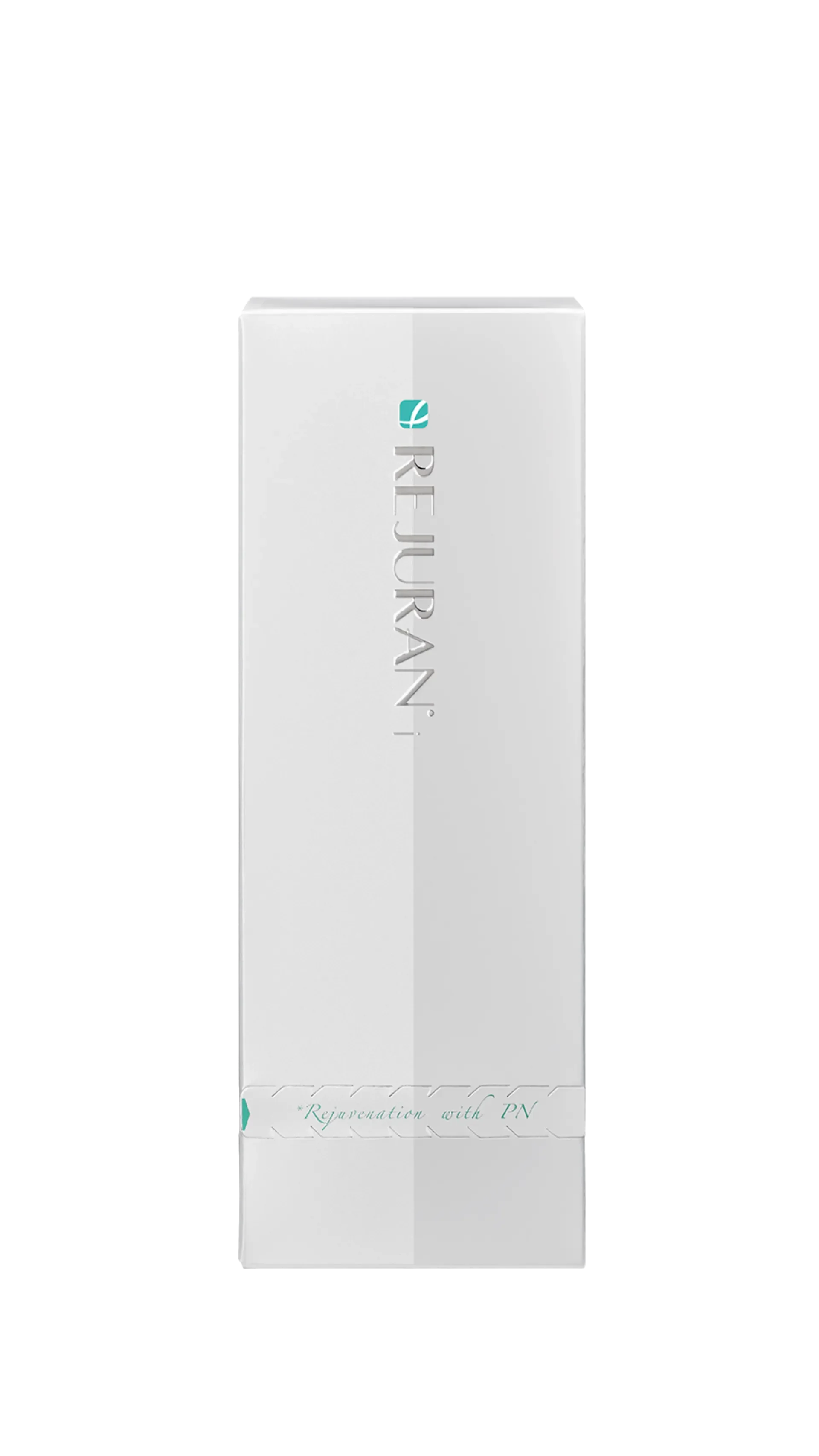
Rejuran is a Korean-manufactured injectable composed of polynucleotides (PN) derived from purified salmon DNA — a dermal repair compound rather than a volumiser, which is the distinction that matters. The polynucleotide fragments, once placed in the superficial and mid-dermal planes, are slowly broken down over four to eight weeks, and the body responds by upregulating fibroblast activity and collagen reorganisation around the injection sites. The aesthetic effect is gradual: refined surface texture, improved skin tone uniformity, reduced fine pore appearance, and a particular quality of skin reflectance that one recognises as healthy without being able to name a single change. Rejuran is approved by Korea's Ministry of Food and Drug Safety (식품의약품안전처), and the published literature on PN biostimulators suggests outcomes correlate strongly with injector technique, depth of placement, and patient selection. A typical first programme runs three to four sessions across eight to twelve weeks, with maintenance every six to nine months thereafter. The result is undramatic, which is, in this register, the highest compliment one can pay an injectable.
How the eight clinics compare
What follows is categorical positioning — not a ranked recommendation. Kind Global reads as the new Myeongdong-gil flagship, a one-to-one consultation model in private treatment rooms with a sixteen-device catalogue under the co-directors' supervision. Re:Berry Myeongdong is a regenerative-led dermatology practice with the Rejuran protocol folded into a programme that also includes exosome boosters and physician-led consultation; the returning international patient mix is the variable one weighs. Cellin Clinic Myeongdong is the academic-credentialled Jung-gu option, with the medical director's Seoul National University training and four Korean society memberships setting the consultation tone. Forena is the English-speaking VIP-suite house with ten-plus private rooms and a fifty-country patient pool — Rejuran is explicit on the published menu. Lienjang is the long-tenured multi-branch practice with a Tokyo and Osaka footprint and a resident anesthesiologist on site. UMI Clinic (Myeongdong) offers a single-site option for sequenced injectable-and-laser work under a named director. Muse Clinic (Gangnam) is the high-throughput Seoul house with a tight focused menu. Ever Skin Clinic Apgujeong is the award-recognised dermatology practice positioned for individual indication-led programmes. One chooses on temperament, not on tier.
How I'd choose between these eight clinics
In my reading, the choice rests less on the brochure than on three quiet variables: who actually performs the injection, whether the vial and the lot number are produced for the patient before reconstitution, and whether the follow-up review at week four is scheduled before the patient leaves the lobby. Studies suggest polynucleotide outcomes correlate more closely with injector seniority and depth-of-placement technique than with any specific device adjunct, which makes the named injector the variable to verify rather than assume. For international patients staying in Myeongdong, walking distance and coordinator language are practical considerations — the houses on Myeongdong-gil and within Jung-gu itself shorten the commute, while the Apgujeong, Sinsa, and broader Seoul suites add a fifteen-to-thirty-minute taxi each way. If one's travel window is four to seven days, the houses with structured pre-arrival imaging and same-day senior consultation suit best; if one is resident in Seoul, the longitudinal practices with a structured three-to-four-session programme reward the longer commitment. The eight clinics above each meet a different brief; one selects on temperament, on indication, and on whether the senior physician is willing to say, candidly, that the first session has already done the work.
How we read these clinics
This survey is editorial — not a ranked recommendation. We read each clinic's published materials, cross-referenced physician credentials against the Korean Medical Association registry where available, and assessed each practice on three dimensions: Rejuran protocol clarity, injector seniority disclosed in writing, and the quality of structured aftercare promised before the patient transfers a deposit. We did not visit every clinic in person for this revision. The eight entries here are clinics one might reasonably consider for Rejuran within reach of a Myeongdong stay — not the only ones. Where a commercial relationship exists with a featured house, the outbound or inline link carries rel="sponsored". We will revise this guide quarterly as practices change.
Frequently asked questions
What is Rejuran, in plain language?
Rejuran is a Korean-manufactured injectable built on polynucleotide fragments derived from purified salmon DNA. It does not fill — it stimulates the dermis to repair its own surface texture and tone over four to eight weeks. The effect is gradual rather than immediate, and a senior injector reads the face on the day rather than the chart.
How many sessions should I plan?
Three to four sessions over eight to twelve weeks is the typical first programme, with maintenance every six to nine months thereafter. A senior physician should review at week four before scheduling the next session — committing to a four-session block up front without that review is, in our reading, a soft signal one might reconsider.
What downtime should I plan for?
Most patients see fine injection marks and mild swelling for two to four days; some experience small, palpable papules near the injection sites that resolve over a week or so as the polynucleotide settles. There are no incisions, no anaesthesia beyond topical cream, and no bandages. One can attend a dinner the same evening — discreetly, with concealer if needed.
How does Rejuran differ from Juvelook or Skinvive?
Juvelook is a PDLLA biostimulator that prompts the body's own collagen production over eight to twelve weeks; Skinvive is a modified hyaluronic acid microdroplet that improves hydration and reflectance over months. Rejuran, alone among the three, is a polynucleotide dermal repair compound — the mechanism focuses on tissue repair and fibroblast activation rather than volumising or pure collagen stimulation.
What should I expect to pay?
A single Rejuran session in central Seoul typically falls between KRW 250,000 and KRW 600,000 per vial, depending on the practice and the regimen. Materially lower prices may indicate counterfeit product or a junior injector; materially higher ones reflect senior-physician injection or VIP-suite operations. Transparent pricing in writing, before booking, is, in my reading, a non-negotiable.
What credentials should I check on the injector?
Korean medical licensure verifiable through the Korean Medical Association, aesthetic medicine experience measurable in years rather than weeks, and, for non-Korean patients, a coordinator fluent enough to translate clinical nuance — not just appointment times. A senior physician's name should appear on the consent and on the injection record.
Can I combine Rejuran with lifting devices like Ultherapy Prime or Sofwave?
Yes, and several of the eight practices on this page do — typically sequenced rather than stacked in one session, with the lifting device administered before the polynucleotide to optimise the dermal scaffold. The senior physician should plan the order and the interval; the published case literature favours sequencing rather than same-day combination.
Are the Myeongdong clinics within walking distance of major hotels?
Kind Global sits on Myeongdong-gil itself — walking distance from the Lotte Hotel Seoul, Hotel 28, and L7 Myeongdong. Re:Berry Myeongdong and Cellin Clinic Myeongdong are both within Jung-gu and a short taxi from the district core. The Apgujeong, Sinsa, and broader Seoul suites on this page are reachable in fifteen to thirty minutes by taxi via Hannam Bridge during off-peak hours.
What are the realistic risks?
Mild bruising, transient swelling, occasional palpable nodules that resolve over weeks, and, rarely, infection if aftercare is poor. Serious adverse events are uncommon when the protocol is physician-administered and the product is sourced through regulated channels. A practice that discusses risk candidly before injection is one to trust.
Who should not book Rejuran?
Patients with active skin infection, recent oral isotretinoin within six months, pregnancy or lactation, unstable autoimmune conditions, known salmon allergy, or known hypersensitivity to polynucleotide compounds should not proceed. A senior physician declining a modality on indication grounds is, in our reading, a signal of practice quality rather than a hindrance to the trip.
What visa or travel logistics should I plan for a Korean trip?
Most visitors from the United States, Hong Kong, Singapore, Japan, and the European Union enter Korea on the standard ninety-day visa-waiver framework — no medical visa is required for the consultations described on this page. A flight that allows three to seven days in Seoul is the comfortable register; the Korea Health Industry Development Institute (khidi.or.kr) publishes the medical-tourism framework, which one reads before the trip.
What does refund and deposit policy generally look like?
Houses at this register hold a refundable deposit — typically twenty to thirty per cent — at the booking stage, returned in full if the consultation indicates Rejuran is not appropriate. Cancellation more than seventy-two hours before the session is generally accommodated without penalty; one asks for the written policy in the patient's language before transferring the deposit, and keeps the email.
How do I tell a genuine Rejuran session from a counterfeit one?
The original packaging carries a Korean Ministry of Food and Drug Safety lot number; a senior practice will, on request, photograph the vial and the lot in front of the patient before reconstitution. A clinic that hesitates is one to leave. The published literature on polynucleotide outcomes assumes genuine product — counterfeit suspensions are categorically a different conversation.