Editorial Picks
7 Traditional Markets Within Reach of Myeongdong — Saki's Walking Guide
An editor's route through seven markets within walking or one-subway-ride of Myeongdong — from the 1414-founded Namdaemun kalguksu alley to the dried-seafood lanes of Joongbu, written the way I plan a Seoul afternoon for visiting friends from Tokyo.
Markets are how I read a city when I have only a week, and Seoul is one of the few capitals where the market tradition still pulls visibly against the shopping-mall current. Myeongdong itself is, by mid-afternoon, almost entirely cosmetics flagships and dessert cafes — the working market that ran in the postwar decades is largely a memory now, displaced one block north into Namdaemun and three subway stops east into Gwangjang. The good news for a visiting reader is that the displacement has been gentle, and the seven markets in this guide all sit inside a walking or one-transfer subway radius of any central-Seoul hotel. I came back to walk them again across a winter editorial week, twelve years after my first visit, and the seven that follow are the ones I now send Japanese visitors to with confidence. The route reads geographically rather than as a ranking — Featured A through Featured G are the order I would walk them, not a leaderboard, and the entries are paired with their canonical specialties and the hours that have held steady across recent guidebook editions. Namdaemun is the longest-running, dating back to the early fifteenth century. Gwangjang is the one international visitors recognise first, after Netflix's Street Food: Asia and several years of CNN Travel attention. Tongin is the small, quietly inventive one with the brass-coin lunchbox system. Insadong is the souvenir antidote when the cosmetics fatigue sets in. Dongdaemun is the late-night midnight shopping cluster. Bangsan and Joongbu are the wholesale specialists for visitors who already know the basics and want to go deeper. The closest comparison from my own Tokyo memory is the Tsukiji outer market before it migrated to Toyosu — same daytime trading rhythm, same sense that the city's interior is held together by these unflashy commercial rooms. Bring small notes, a folded shopping bag, and the patience for slow conversations through pointing and picture menus. Cash is welcomed everywhere; the larger markets now accept card, Alipay, and at the busier stalls Apple Pay.
How this list was put together
I walked these seven markets across five separate afternoons over a two-week editorial window between November and early December, beginning each visit at the busier entry gate the local guidebook indicated and finishing wherever the trading pace softened toward the late afternoon. The brief I set myself was specific. Each market had to be reachable from Myeongdong by foot or by a single subway transfer of no more than fifteen minutes, so that a visitor staying at any of the central-Seoul hotels could organise an afternoon around it without requiring a taxi or a return trip to drop bags. Each had to be documented on at least two of the major travel-press references — Korea Tourism Organization's visit-korea English portal, Seoul Tourism Organization's visit-seoul portal, Time Out Seoul, CNN Travel, or the Michelin Guide Korea destination pages — so that a foreign reader could cross-check the listing against a primary source. Each had to be operating reliably on the day I walked it, with established opening hours and a recognisable trading culture rather than a one-off pop-up. And each had to occupy a distinct editorial slot in the broader Seoul market taxonomy, so that visiting all seven across a single week would teach a returning visitor something about how Seoul's central commercial fabric actually works rather than producing seven near-identical experiences. The result is a mixed list: two foundational markets that everyone visits, two specialty wholesalers that everyone misses, one souvenir-leaning craft district, one late-night shopping complex, and one quietly clever lunchbox-coin operation. I avoided ranking by quality, which in the case of working markets composed of hundreds of independent small operators is a slightly false exercise; the order below is geographical, reflecting the order in which a walking visitor would encounter the markets if they began at Myeongdong Station and worked outward. Hours are reported as the trading reality of the busier stalls on the days I walked. Price tiers are notional and reflect typical single transactions rather than the ceiling of what the market can produce.
- Reachable from Myeongdong on foot or by a single subway transfer of fifteen minutes or less
- Documented on at least two travel-press primary sources
- Established opening hours, not a one-off pop-up or seasonal event
- A distinct editorial slot within the Seoul market taxonomy
- Stable across recent guidebook editions (2024-2026)
- Visitor-friendly entry gates with multilingual signage at major access points
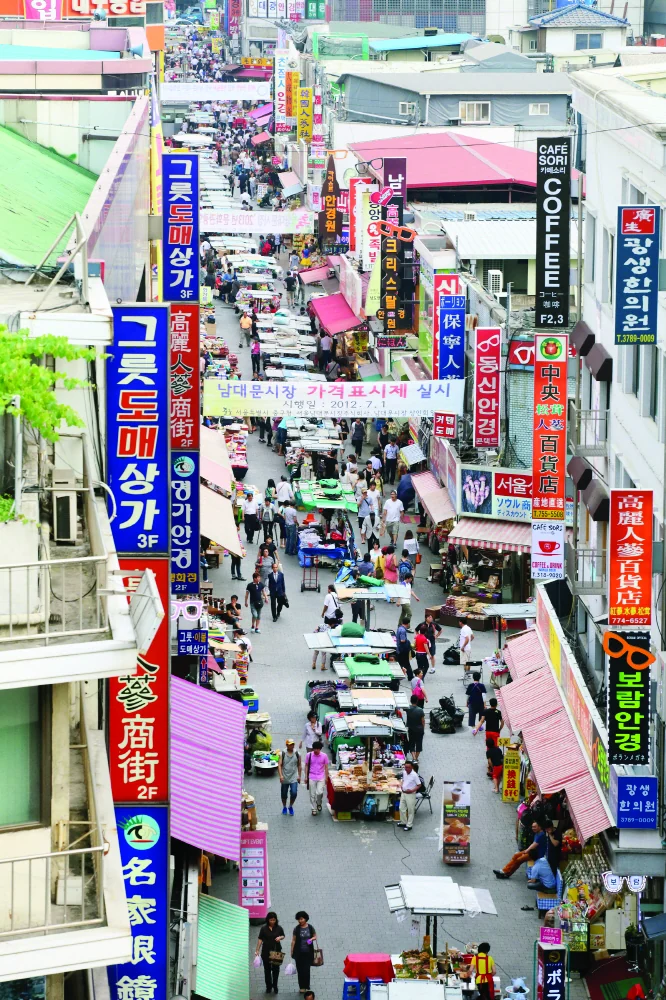
Featured A — Namdaemun Market, the 1414-founded anchor
Namdaemun Market is the oldest continuously operating market in Korea — founded as a royal granary site in 1414, opened to general trading in 1608, and pulled into its present form during the early twentieth century — and it sits, by happy accident of geography, a five-minute walk south of Myeongdong's main shopping strip. The scale takes a moment to register. The market occupies the equivalent of several city blocks, threaded through with alleys narrow enough that two visitors pass each other at a slight diagonal, and the categorical sub-districts inside it are dense enough that a first-time walker can spend an hour without ever seeing the same intersection twice. The two sub-alleys to seek out are the kalguksu alley — a row of perhaps a dozen counters serving the same hand-cut noodle dish in a clouded broth, where you sit at a long communal bench, point at a picture menu, and eat — and the galchi beltfish alley, where the spiced grilled fish has been the lunch reference for several generations of Seoul office workers. The market trades twice. The wholesale operation runs from approximately twenty-three-hundred through to four in the morning, when the goods are sorted and the retail vendors stock up; the retail layer trades from approximately oh-eight-hundred through to eighteen-hundred, with the busiest hours between ten and four. The mix is generous. Hosiery, ginseng, kitchenware, herbal medicines, dried goods, school uniforms, costume jewellery, and the food alleys are all here. The major entrances carry signage in English, Mandarin, and Japanese, and the tourist information booth near the main gate carries multilingual leaflets with a folded map. Address: 21 Namdaemun-ro 4-gil, Jung-gu, Seoul. Wholesale hours: twenty-three-hundred to oh-four-hundred. Retail hours: oh-eight-hundred to eighteen-hundred. Walking time from Myeongdong Station Exit 5: approximately five minutes. Foreigner support: English, Mandarin, and Japanese signage at major entrances; multilingual leaflets at the information booth. Documented in visit-korea, visit-seoul, and Time Out Seoul. The closest reference from Tokyo memory is the Ameya-Yokocho stretch under the JR tracks at Ueno — same multi-layered trading culture, same fluent disregard for shopping-mall logic — though Namdaemun is older by some four centuries and considerably larger in floor area.
Featured B — Gwangjang Market, the food market the world has now seen
Gwangjang Market is the food market a returning visitor brings their visiting friends to for the first long lunch — the one that anchored Netflix's Street Food: Asia, the one that CNN Travel and Eater have written about for the better part of a decade, and the one that, on a Friday evening, holds the densest concentration of standing food counters in central Seoul. The signatures are well-rehearsed. Bindaetteok — the mung-bean pancake fried fresh on cast iron and served with a chopped-radish kimchi and a small cup of clear soju — is the dish most visitors photograph first. Yukhoe, the Korean raw beef tartare with a yolk pressed into the centre, sits in a small corner of the market with a dedicated alley of perhaps eight or ten counters competing on the same dish. Mayak gimbap, the small dipped rice rolls with mustard sauce, runs on its own queue and is the cheaper of the standing snacks at one thousand won per piece. The market sits one subway stop east of Myeongdong on the Line 1 transfer at Jongno 5-ga, or a slightly slower fifteen-minute walk for a visitor who prefers to read the city. Retail hours are oh-nine-hundred to twenty-three-hundred; the food alleys reach peak rhythm from seventeen-hundred onward, and a weekend evening visit will involve a queue. English, Mandarin, and Japanese signage is standard at the major gates, and most food-counter operators carry an English menu card. Pricing sits at five to twenty thousand won per dish, roughly five hundred to two thousand yen at current rates. Address: 88 Changgyeonggung-ro, Jongno-gu. Hours: oh-nine-hundred to twenty-three-hundred, peak food trading from seventeen-hundred. Subway: Jongno 5-ga Station Exit 8, one transfer from Myeongdong. Foreigner support: English, Mandarin, and Japanese signage; English menus at major stalls. Documented in visit-korea, visit-seoul, Time Out Seoul, CNN Travel, and Netflix's Street Food: Asia. To a Japanese reader the closest analogue is the early-evening yatai alleys of Hakata, though Gwangjang's denser and the dish vocabulary is unfamiliar; ordering by pointing at what the counter beside you is eating is the universally successful strategy.
Featured C — Tongin Market, the brass-coin lunchbox experience
Tongin Market is the entry on this list that most clearly belongs to the editorial visitor — the visitor who has done the standard Namdaemun-and-Gwangjang reading and now wants the small, clever market experience that returns visitors to a slightly different relationship with Seoul. The market sits in Seochon, the Tongin-dong neighbourhood west of Gyeongbokgung Palace, and pairs naturally with a morning of palace walking. The trading hours run oh-seven-hundred to twenty-one-hundred. The interior is single-storey, partially covered, and modestly scaled relative to Namdaemun or Gwangjang — perhaps seventy operators across the full length — and the categorical mix is dominated by prepared-food counters, banchan side-dish operators, and a handful of dry goods and craft stalls. The reason to come is the doshirak cafe system, which trades between eleven-hundred and sixteen-hundred and is closed on Mondays. The mechanic is small and pleasant. A visitor buys a stack of brass coins at the central exchange counter for five thousand won — currently ten coins to the set — then carries an empty rectangular lunchbox along the market lanes and exchanges coins at the participating stalls for a portion of whichever banchan, rice or main dish the counter is showcasing that day. The lunchbox fills as the walker moves. Most participating stalls accept one or two coins per portion. The system is built for a single composed meal of perhaps eight to ten components, and the assembled result is eaten at a communal table in the doshirak cafe at the market's centre. The English signage on the system is unusually thorough for a Seoul market — the brass-coin exchange counter carries a printed step-by-step guide in English, Mandarin, and Japanese — and the staff at the centre are practised with international visitors. Address: 18 Jahamun-ro 15-gil, Jongno-gu. Hours: oh-seven-hundred to twenty-one-hundred; doshirak cafe eleven-hundred to sixteen-hundred, closed Mondays. Subway: Gyeongbokgung Station Exit 2, one transfer from Myeongdong via Chungmuro. Foreigner support: English signage, English-capable doshirak counter staff. Documented in visit-korea and visit-seoul. To a Japanese reader the closest comparison is the bento culture in form rather than execution — same composed-meal idea, but assembled actively by the eater rather than handed across pre-arranged.
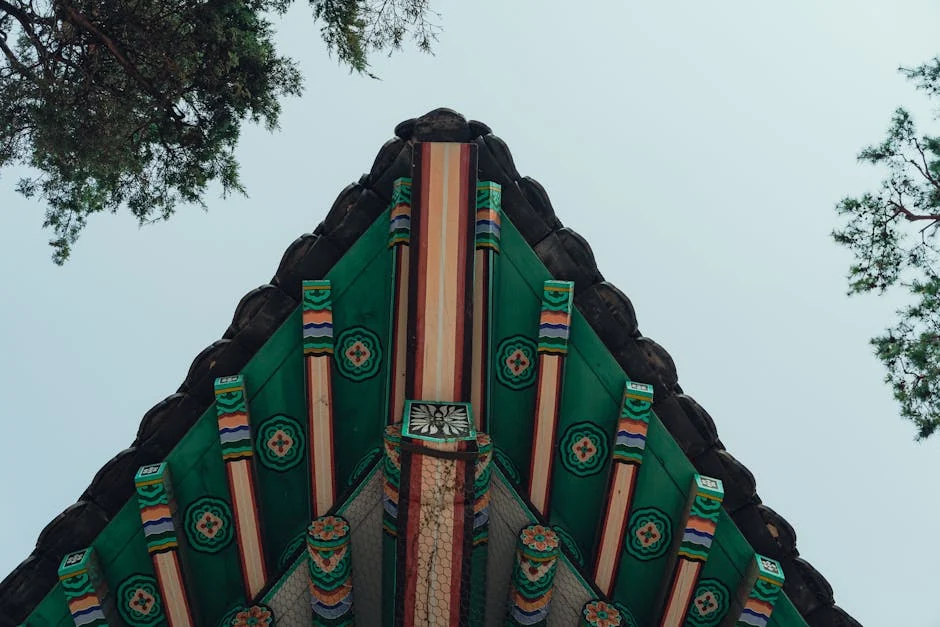
Featured D — Insadong, the antique and craft district
Insadong is the entry on this list that functions as the souvenir relief for the visitor who has reached cosmetics fatigue along Myeongdong-gil and now wants the more deliberate cultural register — calligraphy brushes, ceramic teaware, traditional paper, antique furniture, and the kind of small handcrafted objects that fold cleanly into hand luggage. The district is not a single covered market but a long pedestrianised street with branching alleys, anchored at its southern end by the Anguk Station gate and at its northern end by the Insadong information centre, and it operates more as a sustained craft district than as a trading market in the Namdaemun sense. The shopfronts trade oh-ten-hundred to twenty-one-hundred with some variation by operator, and the back-alley galleries and small workshops keep slightly shorter hours. The categorical mix is consistent. Hanji paper specialists. Tea houses with house-blended Korean teas and ceramic ware. Antique cabinets and chest specialists. Calligraphy and ink shops. The Ssamzigil multi-floor craft complex on the eastern side of the main street holds perhaps eighty independent operators across four levels and is the single-stop reference for a visitor short on time. English, Mandarin, and Japanese signage is the norm at major shops, and the older calligraphy houses keep printed catalogues in three languages. Address: Insadong-gil, Jongno-gu, Seoul. Hours: approximately ten-hundred to twenty-one-hundred. Subway: Anguk Station Exit 6, one transfer from Myeongdong via Jongno 3-ga. Foreigner support: English, Mandarin, and Japanese signage; multilingual catalogues at major craft houses. Documented in visit-korea and visit-seoul. To a Japanese reader the closest reference is the Yanaka or Kappabashi-dori craft districts in Tokyo — same dense small-shop calibration, same multi-generation workshop culture, same pleasure of moving slowly with a folded notebook and a shopping list. The pairing recommendation is a half-day combining Insadong with the adjacent Bukchon Hanok Village, which is fifteen minutes north on foot.
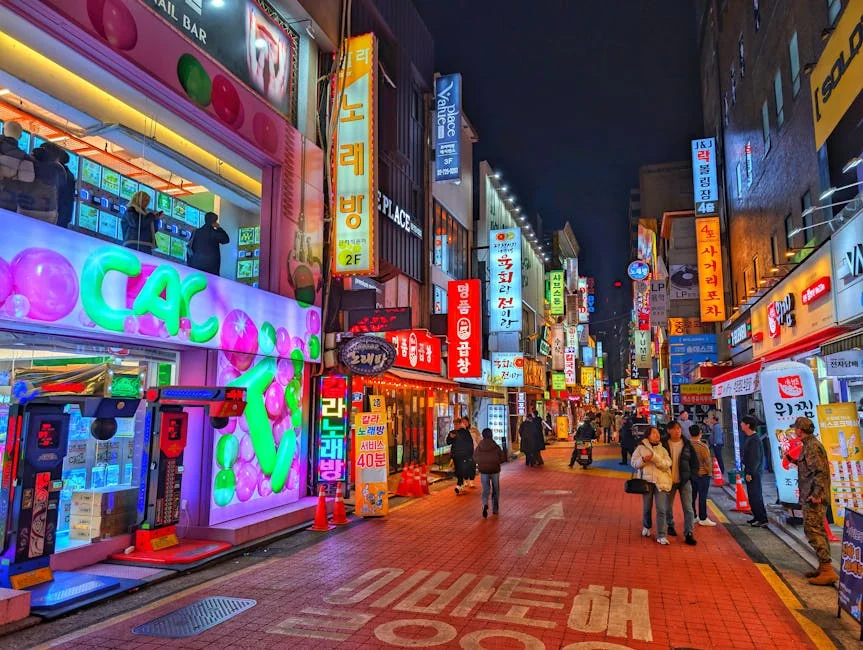
Featured E — Dongdaemun Market, the late-night shopping cluster
Dongdaemun Market is the entry on this list that most clearly belongs to the evening — the cluster of fashion and wholesale-textile complexes that wakes up around the time the rest of central Seoul is winding down, and trades hardest between twenty-two-hundred and four in the morning. The cluster sits east of Myeongdong, two subway stops on Line 4 to Dongdaemun History & Culture Park Station, and is composed of several distinct retail and wholesale buildings: Migliore, Doota, APM, the Hyundai City Outlets, and the older Pyeonghwa wholesale complex slightly to the north. The retail malls — Migliore, Doota, Hyundai — trade ten-thirty to twenty-four-hundred, and accept international cards, Alipay, and the standard Korean payment tools. The wholesale layer — APM and the older arcades — trades from twenty-two-hundred to oh-five-hundred and runs primarily on cash with limited English. The merchandise is fashion-forward midmarket Korean apparel, with a strong representation of the small designer labels and contract manufacturers that supply Korea's broader fashion retail. The Dongdaemun Design Plaza, the Zaha Hadid-designed building immediately adjacent, is the architectural punctuation mark for the area and a useful navigation reference for first-time visitors. The DDP holds a small park and several restaurants, and a slow circle of its undulating exterior is the natural way to break a fashion-shopping evening into rest periods. Address: Eulji-ro and Jangchungdan-ro area, Jung-gu. Wholesale hours: twenty-two-hundred to oh-five-hundred. Retail hours: ten-thirty to twenty-four-hundred. Subway: Dongdaemun History & Culture Park Station Exit 14, two stops from Myeongdong on Line 4. Foreigner support: English, Mandarin, and Japanese signage and English-capable staff at the retail malls; limited English at the wholesale arcades. Documented in visit-korea and visit-seoul. For a Japanese visitor the closest analogue is the late-night fashion floors of Shibuya 109 expanded to the scale of an entire neighbourhood, though Dongdaemun's wholesale layer has no straightforward Tokyo equivalent and is the part of the district most worth seeing if the schedule permits a late-night walk.
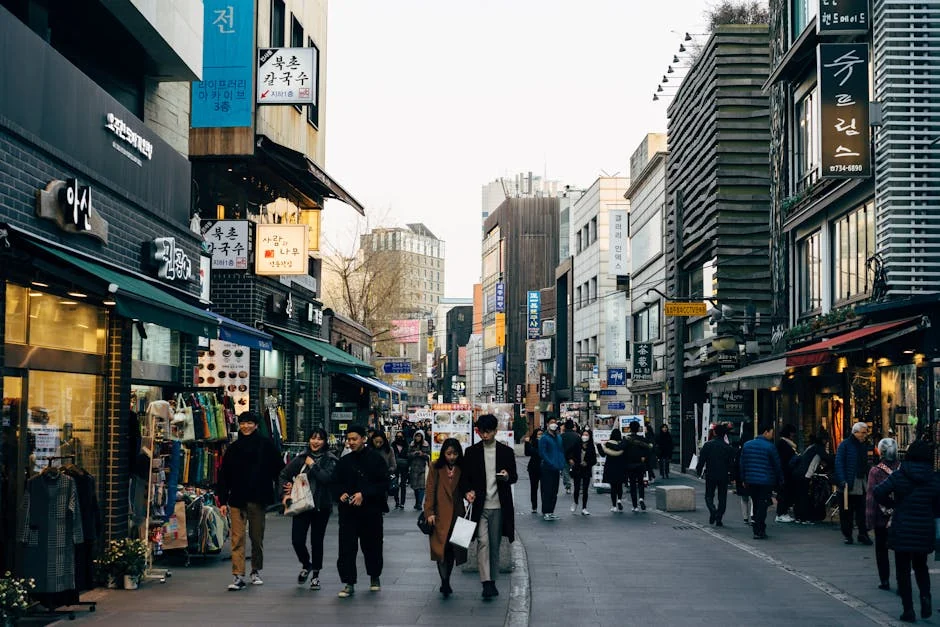
Featured F — Bangsan Market, the wholesale specialist for design tourists
Bangsan Market is the entry on this list that is most clearly off the standard guidebook route, and the entry I would most strongly recommend for a returning visitor with three or four days already behind them. The market sits along the Cheonggyecheon-ro 5-gil stretch, immediately north of the Cheonggyecheon stream walk and a short five-minute walk east of Myeongdong-gil's northern end. The trading culture is wholesale rather than retail — packaging, baking supplies, craft materials, and small-batch production goods — and the visitor experience is slower, less performative, and considerably more interesting than the photographed food alleys of Gwangjang. The two sub-districts to seek out are the packaging specialists, where small paper bags, folding boxes, ribbons, and printed wrapping papers trade by the bundle, and the baking supplies operators, where Korean-language and increasingly bilingual signage labels every conceivable cake-decorating powder, flavouring extract, and silicone mould. The crowd is largely Korean — small business operators stocking up for their own boutiques and bakeries — and the cultural register is closer to a Tokyo Asakusabashi wholesale wander than to a Namdaemun tourist visit. Hours are oh-eight-hundred to eighteen-hundred, closed Sundays. English at the counter is limited, but pricing is generally fixed and clearly labelled, and a visitor who walks slowly with a phone-translator app will navigate competently. The market's cult status among Seoul's so-called Hipjiro creative community has grown notably across 2023-2026, and the surrounding Euljiro print-shop alleys are part of the same broader walking territory — a Bangsan afternoon naturally extends into a Coffee Hanyakbang or Sikmul cafe stop within a five-minute walking radius. Address: Cheonggyecheon-ro 5-gil area, Jung-gu, Seoul. Hours: oh-eight-hundred to eighteen-hundred, closed Sundays. Walking time from Myeongdong: approximately ten minutes north. Foreigner support: limited English, signage primarily in Korean. Documented in visit-seoul and Time Out Seoul. For a Japanese visitor the closest reference is the Asakusabashi wholesale district in Tokyo — same packaging and craft-supply density, same quiet small-business clientele — and the editorial pleasure of either is the same: an unhurried hour of looking at how a city's small businesses actually source their materials.
Featured G — Joongbu Market, the dried-seafood lanes
Joongbu Market is the entry that closes this walking route, and the entry I would treat as the late-afternoon coda for a visitor who has already done the more visible markets and now wants the quietest and most specialised reading. The market sits in Jung-gu, along the eastern edge of the Euljiro stretch, and trades primarily in dried seafood — pollack, anchovy, squid, the dried-and-salted small fish that constitute a foundational layer of Korean home cooking — with a secondary trade in nuts, dried mushrooms, and traditional seasoning pastes. The visitor coming directly from Bangsan can walk the seven or eight minutes east through the print-shop alleys; the visitor coming from Myeongdong can take Line 2 one stop east to Euljiro 4-ga and walk the remaining five minutes. The trading culture is wholesale, the clientele largely restaurateurs and home cooks, and the sensory register — the salt-and-sea note of dried anchovy, the umami density of dried mushroom — is unmistakable from a block away. The market is single-storey, the alleys narrow, and the operators almost universally Korean-language only; pointing and translator apps are the working tools. Hours are oh-six-hundred to nineteen-hundred, with the busiest trading early in the morning. Pricing is wholesale and quoted per kilogram; the smaller dried fish are typically available in two-hundred-gram packets at retail. The market does not feature in the standard international guidebooks for Seoul, which is part of why I include it. A visitor who comes here understands the back-of-house economy that supplies the home-cooking culture the rest of the city eats from, and the experience pairs well — surprisingly well — with a Gwangjang lunch the same day if the schedule permits. Address: Cheongpa-ro 12-gil area, Jung-gu, Seoul. Hours: oh-six-hundred to nineteen-hundred. Subway: Euljiro 4-ga Station, one stop from Myeongdong on Line 2 or via Chungmuro on Line 4. Foreigner support: limited; signage in Korean, pricing labelled. Documented in visit-seoul and Time Out Seoul. For a Japanese reader the closest reference is the dried-goods stretch at Nishiki-koji in Kyoto — same intense aromatic register, same multi-generation operator culture, same useful corrective to a week of more theatrical city moments.
Comparison at a glance
The table below summarises the seven markets across the practical attributes a Japanese visitor is likely to weigh — the dominant specialty, the reliable trading hours, the access from Myeongdong, the price-tier register, and the level of foreigner support. None of these are formal ratings; all are editorial impressions from five walking afternoons across a single winter editorial window.
| Featured | Market | Specialty | Reliable hours | Access from Myeongdong | Price register | Foreigner support |
|---|---|---|---|---|---|---|
| A | Namdaemun Market | General + kalguksu and galchi alleys | 08:00-18:00 retail; 23:00-04:00 wholesale | 5-min walk | Wide range, ₩5,000+ per dish | Strong (EN/CN/JP signage) |
| B | Gwangjang Market | Food market, bindaetteok and yukhoe | 09:00-23:00, peak 17:00+ | 1 subway stop east on Line 1 | ₩5,000-20,000 per dish, ¥500-2,000 | Strong (EN menus, multilingual signage) |
| C | Tongin Market | Doshirak (lunchbox) coin system | 07:00-21:00; lunchbox cafe 11:00-16:00 Mon closed | 1 transfer subway to Gyeongbokgung | ₩5,000+ lunchbox | Strong (multilingual instructions for coin system) |
| D | Insadong | Antique, calligraphy, ceramic, hanji paper | 10:00-21:00 | 1 transfer subway to Anguk | Wide range, gift-shopping tier | Strong (EN/CN/JP shop signage) |
| E | Dongdaemun Market | Fashion retail and wholesale, late-night | 10:30-24:00 retail; 22:00-05:00 wholesale | 2 subway stops east on Line 4 | Wide range | Strong at retail malls; limited at wholesale |
| F | Bangsan Market | Packaging, baking supplies, craft materials | 08:00-18:00, closed Sundays | 10-min walk north | Wholesale tier, fixed pricing | Limited English; signage in Korean |
| G | Joongbu Market | Dried seafood and seasoning pastes | 06:00-19:00 | 1 subway stop on Line 2 | Wholesale tier, per-kilogram | Limited English; signage in Korean |
How to walk the route
A pragmatic note for the visitor who would rather walk the route than read about it. Begin at Myeongdong Station and walk five minutes south to Namdaemun for an early-afternoon kalguksu lunch — the alley is at its best between twelve and one — then circle the dried goods and ginseng districts of the inner market for an unhurried hour before doubling back to the station. Take Line 4 north to Chungmuro and transfer to Line 3, which carries you west to Gyeongbokgung for Tongin Market and the doshirak cafe in the early afternoon; the system closes at sixteen-hundred and Mondays are dark, so a Tuesday or Wednesday is the safer scheduling. The same Line 3 will return you east to Anguk for Insadong, which absorbs a comfortable late-afternoon hour and a half. By early evening the natural pivot is south to Jongno 5-ga for Gwangjang, where the food alleys reach trading peak from seventeen-hundred and a stand-up dinner across three or four counters constitutes a credible Seoul evening. Dongdaemun, two stops east on Line 4, is the late-night option for any visitor still standing. Bangsan and Joongbu sit on their own quieter half-day, ideally a separate morning beginning at Myeongdong, walking ten minutes north to Bangsan for an unhurried packaging-and-supply hour, then continuing east through the Euljiro print-shop alleys to Joongbu's dried-seafood lanes. The Cheonggyecheon stream walk is the natural connective tissue between Bangsan and Joongbu. Cash matters less than it did five years ago — most retail operators now accept Korean cards, and at the busier stalls Alipay, Apple Pay, and WeChat Pay — but a small reserve of ten-thousand-won notes simplifies the wholesale transactions at Bangsan and Joongbu. A folded shopping bag is the single most useful object to bring; the markets do not pack purchases as deliberately as Tokyo department stores do, and the gift-shopping at Insadong in particular benefits from carrying your own bag. For evening logistics, all seven markets are within a fifteen-minute subway ride of Myeongdong Station, and any central-Seoul hotel can be returned to in under twenty minutes from the latest of the seven.
Frequently asked
Eight common questions from Japanese and other visiting eaters and shoppers.
“Markets are how I read a city when I have only a week, and Seoul is one of the few capitals where the market tradition still pulls visibly against the shopping-mall current.”
Saki Watanabe, Myeongdong notebook
Frequently asked questions
Which market is closest to Myeongdong?
Namdaemun Market is the closest, approximately five minutes south on foot from Myeongdong Station Exit 5 or directly accessible from Hoehyeon Station Exit 5 on Line 4. The retail layer trades from oh-eight-hundred to eighteen-hundred daily. The kalguksu alley and the galchi beltfish alley are the two food sub-districts that anchor most first-time Namdaemun lunches.
What time do the markets open and close?
Hours vary by market type. Retail trading runs from oh-eight-hundred to eighteen-hundred at Namdaemun, ten-hundred to twenty-one-hundred at Insadong, and oh-nine-hundred to twenty-three-hundred at Gwangjang. The wholesale layer at Namdaemun trades from twenty-three-hundred to oh-four-hundred, and Dongdaemun's fashion wholesale runs twenty-two-hundred to oh-five-hundred. Tongin Market's brass-coin doshirak cafe is the strictest — eleven-hundred to sixteen-hundred, closed Mondays.
Are these markets walking distance or do I need the subway?
Two of the seven are walking distance from Myeongdong — Namdaemun at five minutes south and Bangsan at ten minutes north. The remaining five are reachable by a single subway stop or one transfer: Gwangjang one stop east on Line 1, Joongbu one stop east on Line 2, Dongdaemun two stops east on Line 4, and Tongin and Insadong one transfer west on Line 3 to Gyeongbokgung or Anguk Station respectively.
Do the markets accept card or only cash?
The larger retail operators at Namdaemun, Gwangjang, Insadong, and Dongdaemun's retail malls now accept Korean credit cards and at the busier stalls Alipay, WeChat Pay, and Apple Pay. The wholesale layers at Bangsan, Joongbu, and Dongdaemun's older arcades remain cash-preferred. Carrying a small reserve of ten-thousand-won notes simplifies transactions across all seven.
How much should I budget for a market afternoon?
A comfortable Gwangjang or Namdaemun food walk across three or four counters lands at twenty thousand to thirty thousand won per person — roughly two to three thousand yen. The Tongin doshirak system runs five thousand won for the coin set with most participants spending eight to twelve coins per meal. Insadong souvenir purchases sit anywhere from ten thousand won for hanji paper to two hundred thousand won for a small ceramic teaware set.
Is there an English or Japanese menu at the markets?
Foreigner support is strongest at Namdaemun, Gwangjang, Tongin, Insadong, and Dongdaemun's retail malls, all of which carry English, Mandarin, and Japanese signage at major entrances and at most food counters. Bangsan and Joongbu run on Korean signage with limited English at the counter; a phone-translator app and patient pointing carry a visitor through both.
Which market should I visit first if I have one afternoon?
Namdaemun in the early afternoon for the kalguksu alley and ginseng districts, followed by an evening at Gwangjang for the food counters from seventeen-hundred onward. The two together cover the foundational central-Seoul market vocabulary — a 1414-founded general market and a Netflix-documented food market — and a visitor with only one afternoon will return home with a credible reading of how Seoul's market culture works.
Are the markets open on Korean public holidays?
Hours adjust at the major Korean traditional holidays — Seollal (Lunar New Year) and Chuseok (autumn harvest festival) — when many smaller operators close for two to three days. Namdaemun and Gwangjang generally maintain reduced trading; Bangsan, Joongbu, and Tongin's doshirak cafe more often close fully. Same-day confirmation through Naver Map or Kakao Map is the standard editorial workflow around either holiday.