Editorial Picks
7 Traditional Korean Restaurants Around Myeongdong — Saki's Tokyo-to-Seoul Lunch Map
Seven Seoul dining rooms within walking radius of Myeongdong — Featured A through Featured G in the order I walk them — paired with the Tokyo and Osaka tables they quietly resemble, written for visiting friends from Japan who already know how to read a noodle counter.
I keep a quiet rule for Tokyo friends visiting Seoul. Before the cosmetics flagships, before the Hangang river walk, before any of the bigger plans, I send them to one of the seven Korean dining rooms in this guide for lunch. The reason is that Seoul, like Tokyo, is a city whose interior is held together by old institutional kitchens — kalguksu houses that opened in the 1960s, gomtang counters from 1939, Pyongyang-origin noodle rooms from the immediate post-war years — and a returning visitor who learns to read these rooms early gains a frame for everything else the city is going to offer. I have walked these seven restaurants across multiple Seoul editorial weeks now, the most recent in a single winter run between late November and early December. Featured A through Featured G are the order I would walk them, not a leaderboard. The closing reference I keep returning to is Tsukiji's outer market before the Toyosu migration — same daytime trading rhythm, same sense that the city's interior is held together by these unflashy commercial rooms. The seven restaurants in this guide all sit inside a fifteen-minute walking or one-transfer subway radius of any central-Seoul hotel. The Tokyo and Osaka cross-references in each entry are the closest functional analogue I have found in my own dining memory for the kind of room each Seoul kitchen actually is.
How I chose these seven Korean restaurants for visiting Japanese friends
I walked the seven restaurants in this guide across four separate afternoons inside a single winter editorial window. The brief I set myself was specific. Each restaurant had to be reachable from Myeongdong by foot or by a single subway transfer of no more than fifteen minutes. Each had to be continuously operating for at least two decades in central Seoul, and several on this list have been here since the 1930s, 1940s, and 1960s. Each had to be documented on at least one of the Michelin Guide Korea, Korea Tourism Organization's visit-korea portal, Seoul Tourism Organization's visit-seoul portal, CNN Travel's Seoul coverage, or Time Out Seoul, so a Japanese reader could cross-check the listing against a primary source. Each had to occupy a distinct editorial slot within the Seoul traditional-Korean taxonomy, with intentional category overlap only on Pyongyang naengmyeon, where comparing two houses inside one category is the standard editorial reading. And each had to be readable as a single sitting for a visiting Japanese friend without translation anxiety — an English or Japanese menu on the table, or photographs in the Korean menu with practised pointing-and-ordering rhythm at the counter. The result is a mixed list: two foundational central-Seoul institutions, two Pyongyang naengmyeon houses cited in pairs by every credible Seoul food writer, one bulgogi-and-naengmyeon institution from 1946 that I treat as a small standing miracle of continuity, one samgyetang detour west of the walking radius, and one quiet bibimbap room on the Namsan foothills for the afternoon when the city has been very loud. The order below is geographical, reflecting the order in which a walking visitor based in Myeongdong would naturally encounter the kitchens.
- Reachable from Myeongdong on foot or by a single subway transfer of fifteen minutes or less
- Continuously operating in central Seoul for at least two decades, with most on this list older than 1970
- Documented on at least one of the Michelin Guide Korea, visit-korea, visit-seoul, CNN Travel, or Time Out Seoul
- Covers a foundational Seoul-traditional dish category, with intentional overlap only on Pyongyang naengmyeon
- Readable for a visiting Japanese friend without translation anxiety — English or Japanese menu, or photographs in the Korean menu
- Geographic ordering Featured A to Featured G — not a ranking
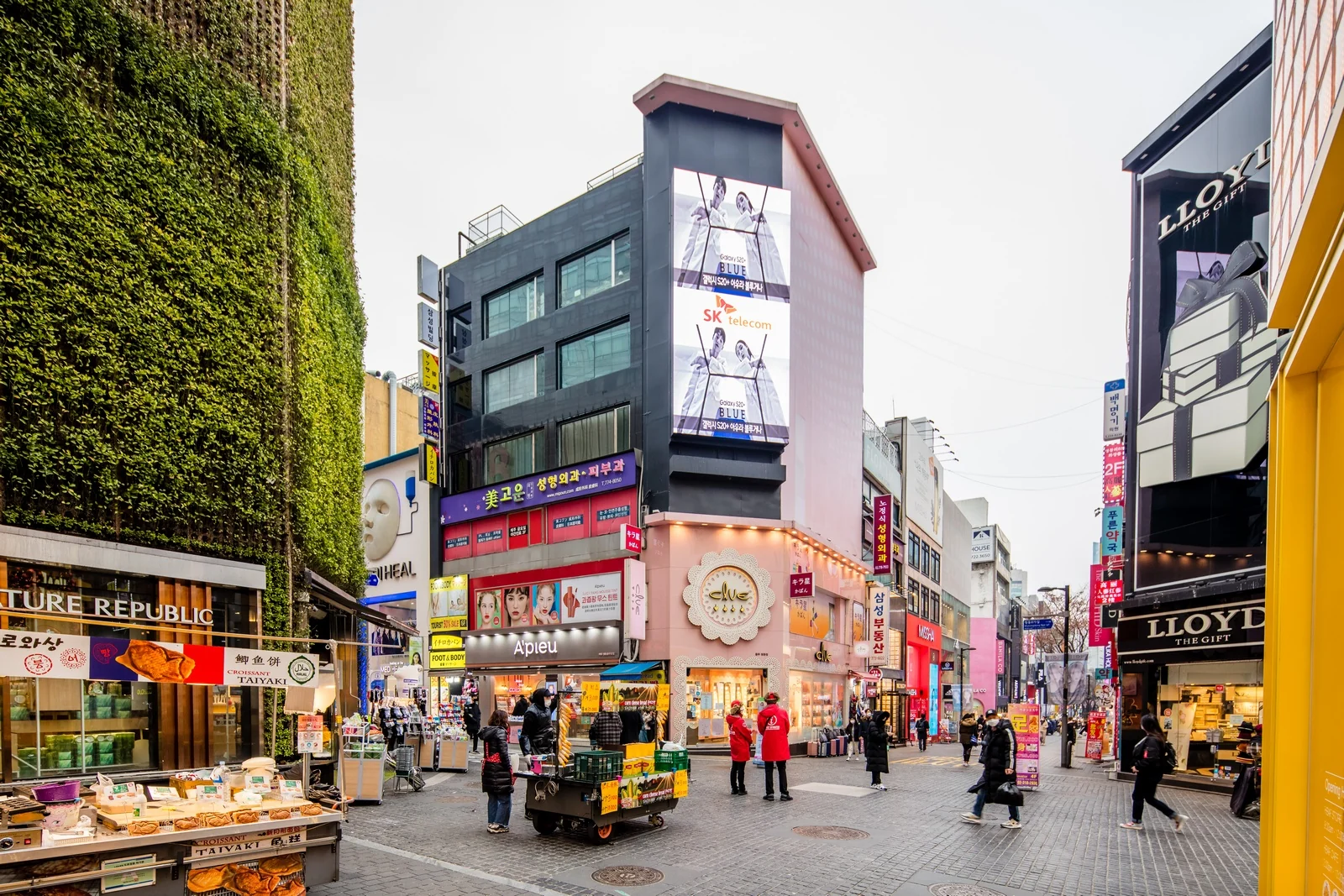
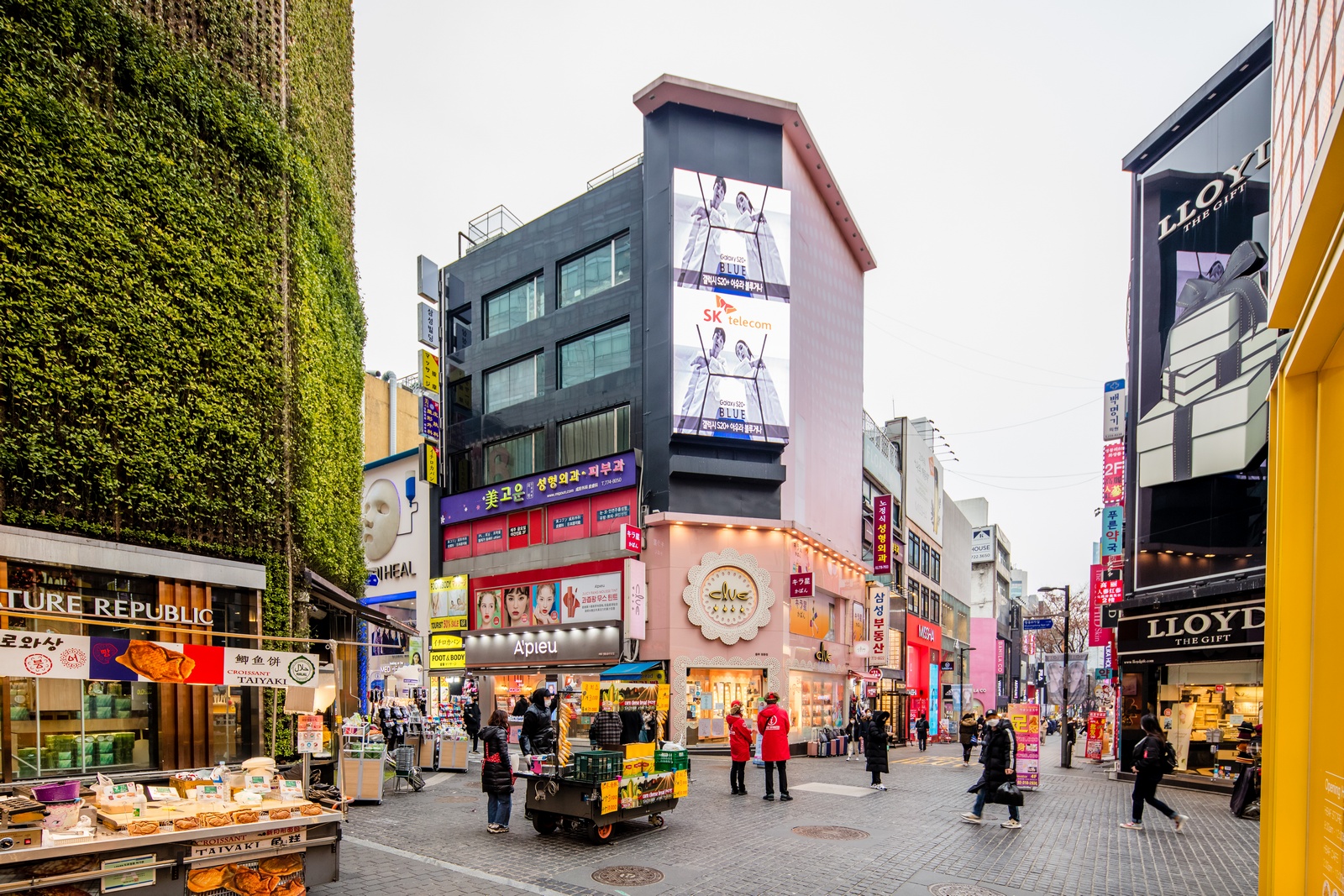
Featured A — Myeongdong Kyoja, the 1966 kalguksu counter
Myeongdong Kyoja is the room I send Tokyo friends to for the first lunch — three minutes on foot from Myeongdong Station Exit 6, open in some form since 1966, and the address most reliably cited by the Michelin Guide Korea's Bib Gourmand category for multiple consecutive years. The dish is kalguksu in its classical form: hand-cut wheat noodles in a clouded chicken broth, finished with small minced beef-and-pork dumplings and a sharp young kimchi that the house makes and serves quite young by tradition. The mechanics of the room have the same focused choreography I recognise from a long-running Tokyo noodle counter — the kitchen and the dining room are timed to turn tables briskly, and the dish itself rewards rapid eating because the noodles change body as the broth cools. Hours run ten-thirty to twenty-one-thirty daily. Price range sits at ten thousand to fifteen thousand won, roughly one thousand to one thousand five hundred yen at current rates. English, Mandarin, and Japanese menus are on the table; staff handle pointing-and-ordering with calm. The Michelin Bib Gourmand mention and the visit-seoul restaurants directory are the canonical public references. Address: 29 Myeongdong 10-gil, Jung-gu, Seoul. Order the kalguksu-mandu combination on a first visit — the dumplings are the second house signature and arrive in their own bowl with a clear ginger-soy. The room is multi-floor; the upper floors are typically quieter at peak hours. To a Japanese reader the closest reference from my own dining memory is the long-running Sarashina-Horii soba house in Azabu-juban — same focused single-dish identity, same multi-generational kitchen continuity, same fluent disregard for the trend cycle.
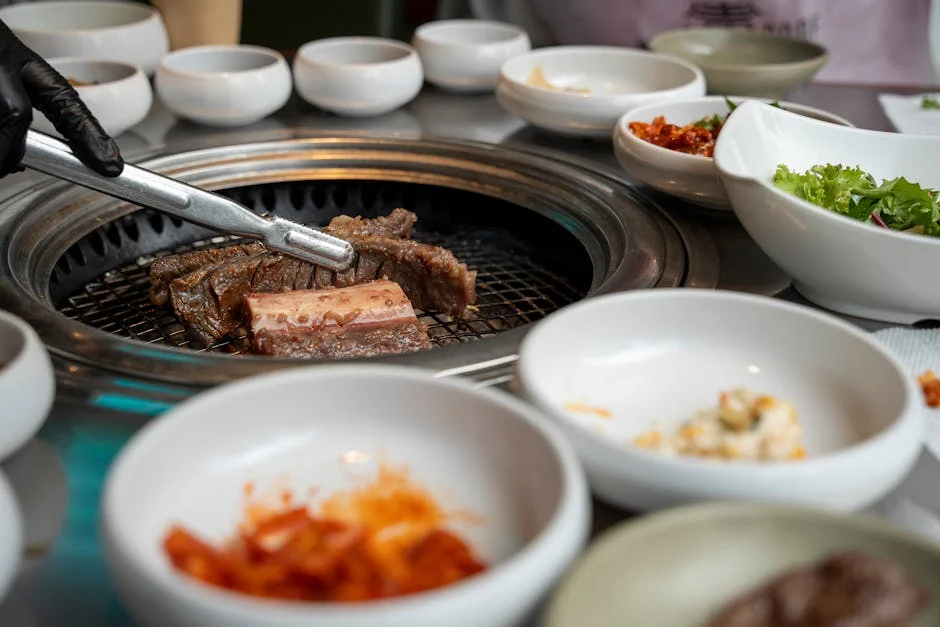
Featured B — Hadongkwan, the 1939 gomtang institution
Hadongkwan is the early-lunch room on this list, and the reason is structural — the kitchen closes at sixteen-hundred, which makes it the most authoritative breakfast-as-lunch in central Seoul. Open since 1939 and now four generations into the same gomtang recipe, Hadongkwan is one of the oldest continuously operating restaurants in the city. The dining room is plain in the way that institutional rooms tend to be: brass bowls, white rice, a small dish of kkakdugi cubed-radish kimchi, and a pale broth that gets its body from a slow long simmer rather than from added seasoning. Diners adjust their own bowls at the table with sea salt and chopped scallion from a small caddy, which is itself the kind of editorial pleasure my Tokyo visitors quietly recognise from the older Tokyo Higashiyama beef-tail soup counters. The address is 12 Myeongdong 9-gil, four minutes from the station. Hours are oh-seven-hundred to sixteen-hundred daily. Price range runs fifteen thousand to twenty-five thousand won, roughly one thousand five hundred to two thousand five hundred yen. There is an English menu and basic English at the counter. The Michelin Guide Korea, visit-korea, and Time Out Seoul all cite Hadongkwan as a defining Seoul gomtang reference. Order the gomtang gongkibap — gomtang with rice on the side rather than dropped into the bowl — on the first visit. The brass-bowl setting and the lack of seasoning at the table read, in 2026, as a kind of editorial luxury that almost no major Tokyo or Osaka dining room still preserves at this scale. The closest Tokyo analogue is the Yoshinoya original counter at Tsukiji's outer market before the Toyosu move — same focused single-dish kitchen continuity, same insistence on serving the dish as the kitchen has always served it.
Featured C — Wooraeok, the 1946 Pyongyang-origin bulgogi-and-naengmyeon institution
Wooraeok is the entry on this list that does two things at once — bulgogi at lunch and Pyongyang-style mul-naengmyeon as the standard accompanying bowl — and it does both with the unmistakable continuity of a kitchen that has been running since 1946. The address is 62-29 Changgyeonggung-ro, Jung-gu, north of Euljiro, reachable by a single-transfer subway ride via Chungmuro, or a fifteen-minute walk. The Michelin Guide Korea has carried Wooraeok on its Bib Gourmand list for multiple consecutive years, and the visit-seoul and Time Out Seoul references converge on it as the canonical post-war Pyongyang-origin Seoul institution. The room itself is larger than a first-time visitor expects — multiple dining floors, brass tableware on rosewood, the kind of measured front-of-house calm I associate with the older Osaka Kappo houses on the south bank of the Dotonbori. The bulgogi arrives marinated and grilled tableside in a brass dome pan with mushrooms, scallion, and the house's signature lightly sweetened soy reduction. The naengmyeon is ordered as a second course rather than a main, and shares the Pyongyang lineage of Pildong and Eulji further south but reads, in execution, as slightly more body-forward than either. Hours run eleven-thirty to twenty-one-hundred with a kitchen break from fifteen-hundred to seventeen-hundred, and the house is closed Mondays — the strictest closing rhythm on this list. Price range sits at thirty thousand to sixty thousand won per person, roughly three thousand to six thousand yen, which makes Wooraeok the upper-tier address and the place to bring visiting Tokyo friends for a celebratory lunch. English menu on the table; staff practised at international visitors. To a Japanese reader the closest reference is the Imahan Asakusa main branch at sukiyaki lunch — same multi-generation continuity, same tableside cooking choreography. The bulgogi-naengmyeon pairing is, for my money, the single most Seoul-specific dining sequence on this list.
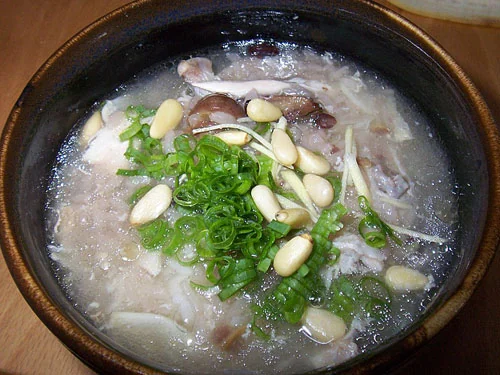

Featured D — Tosokchon Samgyetang, the canonical samgyetang detour
Tosokchon Samgyetang is the samgyetang house that international visitors know first, and the only address on this list that asks you to step outside the immediate Myeongdong walking radius — a fifteen-minute taxi west to Seochon or a single subway transfer to Gyeongbokgung Station. The address is 5 Jahamun-ro 5-gil, Jongno-gu, on the western side of Gyeongbokgung Palace, and the room is a converted hanok with low ceilings and a steady queue. The samgyetang is dense in broth — a young chicken stuffed with glutinous rice, garlic, jujube, and Korean ginseng, simmered until the bird sits poised between holding shape and surrendering — and the bowl carries a fuller herbal profile than the leaner Euljiro samgyetang style. Hours run ten-hundred to twenty-two-hundred. Price range sits at eighteen thousand to twenty-two thousand won, roughly one thousand eight hundred to two thousand two hundred yen. English, Japanese, and Mandarin menus and front-counter staff are standard. The visit-seoul portal, CNN Travel's Seoul restaurants longread, and Time Out Seoul all anchor Tosokchon. The editorial reason to include a non-Myeongdong samgyetang house on a Myeongdong list is simple — Tosokchon's denser herbal register reads against the leaner Euljiro counterparts the way two related Kyoto kaiseki houses do across a Kamogawa river crossing. Korea's sambok tradition of eating samgyetang on the three hottest days of the year — boyok, jungbok, malbok — is a real seasonal pulse, and Tosokchon is where to read the dish from the inside. The pairing recommendation is a half-day combining Tosokchon with a slow walk through the surrounding Gyeongbokgung Palace quarter and the adjacent Seochon hanok lanes, both of which Tokyo visitors with a Kyoto Higashiyama frame of reference will recognise immediately. The closest Tokyo analogue is the older sukiyaki Imahan Ningyocho branch on a January afternoon — same focused single-dish identity, same multi-generation kitchen, same insistence on the herbal and stock body that the dish needs to be itself.
Featured E — Mokmyeoksanbang, the quiet Namsan-foothill bibimbap room
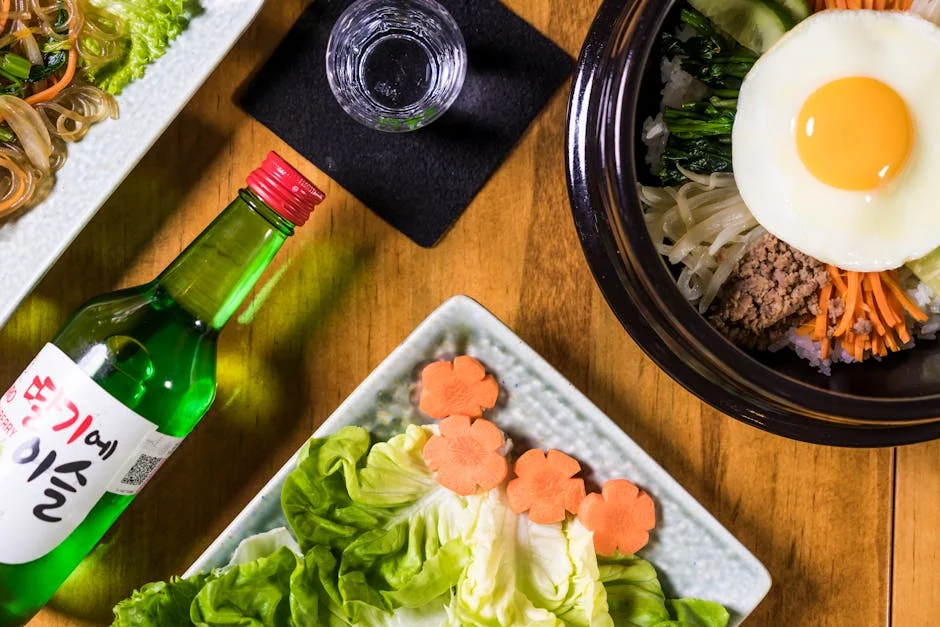
Mokmyeoksanbang is the quiet hour on this list — the address I save for the afternoon when central Seoul has been very loud and a returning visitor needs a sit-down meal with longer silences. The address is 1-5 Toegye-ro 20-gil, on the lower foothills of Namsan immediately south of the Myeongdong main strip, and the dining-room interior is a traditional Korean wooden room with deliberately low lighting and the kind of muted acoustic register you almost never find at street level in this city. The headline dish is bibimbap — warm rice in a heavy stone bowl, finished with seasoned vegetables, a small amount of beef, a yolk pressed into the centre, and a quietly insistent gochujang. The bowl arrives still cooking the bottom layer of rice into the room's signature nurungji crust; eat the top quickly, mix thoroughly, and let the bottom layer crisp before scraping it loose. Hours run eleven-hundred to twenty-thirty with last orders at nineteen-thirty. Price range sits at ten thousand to fifteen thousand won, roughly one thousand to one thousand five hundred yen. An English menu is available. Visit-seoul and Time Out Seoul list Mokmyeoksanbang within their Namsan-area routings. Order the doenjang-jjigae alongside; the soybean stew is a quieter accompaniment than the more aggressive kimchi-jjigae elsewhere in Myeongdong. The pairing recommendation is a Namsan cable-car ride to N Seoul Tower immediately after lunch. The closest reference from my own memory is the older Kyoto Higashiyama tofu kaiseki rooms tucked behind Yasaka Shrine — same deliberately lowered acoustic register, same heavy wooden room, same insistence on a single composed dish at the centre of the meal.
Featured F — Pildong Myeonok, the austere Pyongyang naengmyeon
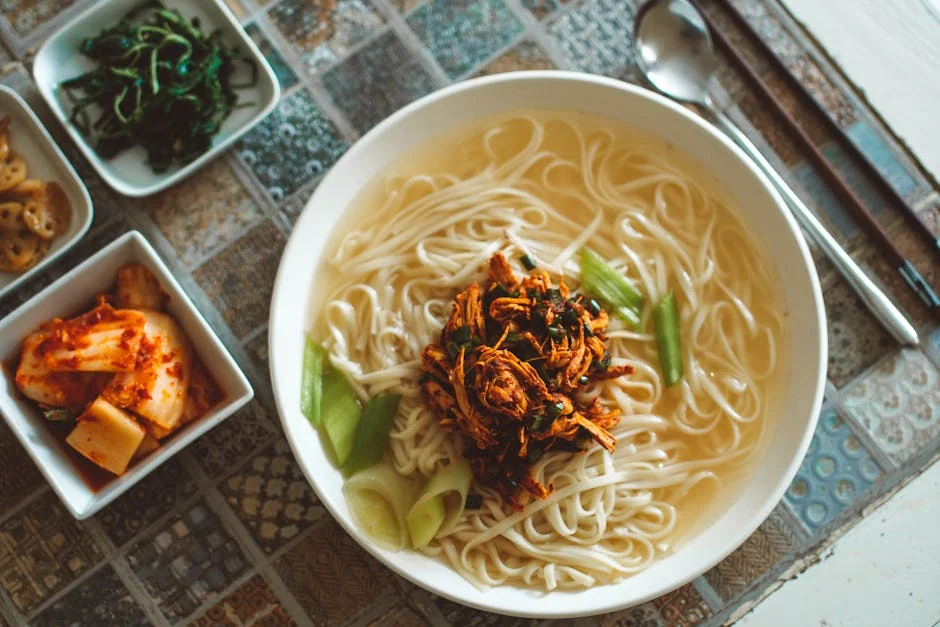
Pildong Myeonok is one of the two canonical central-Seoul references for Pyongyang-style mul-naengmyeon, the cold buckwheat noodle dish that defines summer Seoul lunch and which I treat as the most demanding dish on this list to learn to read. The address is 26 Seosomun-ro 11-gil, in the Chungmuro-Pildong block immediately south of Myeongdong, and the room sits inside a small alley network that has been continuously functioning as a working office-worker lunch district since the 1970s. The broth is intentionally restrained — clean, faintly mineral, lightly tart — and the noodles are pulled with the particular elasticity that buckwheat gives when handled by a long-tenured kitchen. Hours run eleven-hundred to twenty-one-hundred with a mid-afternoon break from fifteen-thirty to seventeen-hundred. Price range sits at thirteen thousand to eighteen thousand won, roughly one thousand three hundred to one thousand eight hundred yen. An English menu is at the table. Pildong Myeonok carries the Michelin Guide Korea's Bib Gourmand mention. Read this room as the temperature counter to the warmer samgyetang and bulgogi rooms — the same Myeongdong afternoon, but a thirty-degree shift in the bowl. Pyongyang naengmyeon as a category divides Seoul food writers, and Pildong sits firmly on the austere end of the spectrum: the broth carries less sweetness than the more popular Pyongyang-style rooms in Seochon. First-timers occasionally find the broth's quietness disorienting; the Pyongyang style is a deliberate restraint, and rewards a second visit more reliably than a first. The closest analogue from my own dining memory is Sarashina-Horii in Azabu-juban during the cold soba season — same intentional broth restraint, same buckwheat purity at the centre of the bowl.
Featured G — Eulji Myeonok, the sister Pyongyang naengmyeon house
Eulji Myeonok closes the walking route with the other half of the central-Seoul Pyongyang naengmyeon canon, and is almost universally cited in pairs with Pildong by Seoul food writers. The house operates from a Nakwon-dong address in the Jongno-gu boundary — relocated from the older Euljiro 14-gil lanes in 2023, a detail worth flagging because older guidebooks still list the previous address — and the trading culture inside is the deeper print-shop and metalwork alley register that defines the Hipjiro creative-quarter side of the city. The broth here carries a slightly different profile than Pildong Myeonok's — a touch more savoury, a touch less austere — and the noodle texture sits a half-step softer, which makes the side-by-side comparison particularly informative. Hours run eleven-hundred to twenty-one-hundred with last orders at twenty-thirty. Price range sits at thirteen thousand to eighteen thousand won, roughly one thousand three hundred to one thousand eight hundred yen. English at the door is limited, but the Korean menu carries photographs and the staff are practised at international guests. Time Out Seoul and the visit-seoul portal both anchor Eulji Myeonok inside their old-Euljiro itineraries. The dish at Eulji is the warmer reading of the same Pyongyang lineage — the broth more present, the noodle more yielding — and the dining-room rhythm is slower than Pildong's. The Hipjiro creative-quarter walking territory immediately surrounding the dining room is its own slow pleasure, and a Japanese visitor with a Yanaka or Kagurazaka frame of reference will recognise the cultural register immediately. The closest analogue is the Sarudahiko coffee roasters' main Roppongi branch in winter — same multi-generation continuity, same insistence on the older single-dish identity at the centre of the room.
Comparison at a glance
The table below collapses the seven Featured restaurants into a single planning surface for a visiting Japanese reader. Walking time is measured from Myeongdong Station Exit 5 or Exit 6, the two exits that handle most central-Seoul visitor traffic. Price ranges are per-person at lunch and reflect the house's signature dish at current rates. Hours are subject to occasional same-day adjustment for traditional Korean holidays, and Wooraeok closes Mondays and the kitchen breaks at three in the afternoon, which is the strictest schedule on the list and the one most worth confirming via Naver Map the morning of your visit. None of these are formal ratings; all are editorial impressions from four walking afternoons across a single winter editorial window.
| Featured | Restaurant | Defining dish | Walking radius | Hours | Price range |
|---|---|---|---|---|---|
| A | Myeongdong Kyoja | Kalguksu, mandu | 3 min from Myeongdong Stn Exit 6 | 10:30 - 21:30 daily | ₩10,000 - ₩15,000 (~¥1,000-1,500) |
| B | Hadongkwan | Gomtang (clear beef-bone soup) | 4 min from Myeongdong Stn | 07:00 - 16:00 daily | ₩15,000 - ₩25,000 (~¥1,500-2,500) |
| C | Wooraeok | Bulgogi + Pyongyang naengmyeon | 1-transfer subway or 15 min walk north | 11:30 - 21:00 (break 15:00-17:00); closed Mondays | ₩30,000 - ₩60,000 (~¥3,000-6,000) |
| D | Tosokchon Samgyetang | Ginseng chicken soup, dense broth | 15 min taxi or 1-transfer subway to Gyeongbokgung | 10:00 - 22:00 | ₩18,000 - ₩22,000 (~¥1,800-2,200) |
| E | Mokmyeoksanbang | Stone-bowl bibimbap | 8 min south, Namsan foothills | 11:00 - 20:30 (last order 19:30) | ₩10,000 - ₩15,000 (~¥1,000-1,500) |
| F | Pildong Myeonok | Pyongyang naengmyeon, austere | 7 min south, Pildong / Chungmuro | 11:00 - 21:00 (break 15:30-17:00) | ₩13,000 - ₩18,000 (~¥1,300-1,800) |
| G | Eulji Myeonok | Pyongyang naengmyeon, savoury sister | 1 stop on Line 2 to Euljiro 3-ga + 5 min walk | 11:00 - 21:00 (last order 20:30) | ₩13,000 - ₩18,000 (~¥1,300-1,800) |
How I plan a three-day Myeongdong food itinerary for Tokyo friends
A three-day Myeongdong traditional Korean food itinerary is the editorially natural reading of this list, because the seven Featured entries spread across complementary categories rather than competing inside one. Day one I front-load the early-close houses. Hadongkwan opens at oh-seven-hundred and closes at sixteen-hundred, which makes a nine-thirty or ten-hundred sitting the editorially correct opening of the trip; the brass-bowl gomtang sets the right register for everything that follows. A slow mid-morning walk through Myeongdong main street pivots into Myeongdong Kyoja for a twelve-thirty kalguksu lunch, and the afternoon is given to a Namsan cable-car ride and a quiet hour at the N Seoul Tower deck. The evening is the Pildong Myeonok mul-naengmyeon at the kitchen's eighteen-hundred opening, as the right temperature counter to a warm gomtang morning. Day two I pace more quietly. Wooraeok at twelve-thirty for the bulgogi-and-naengmyeon pairing, and an afternoon walk through the Euljiro print-shop alleys before pivoting east on Line 2 to Eulji Myeonok for an early dinner that completes the Pyongyang naengmyeon comparison. Day three is the Tosokchon detour, a fifteen-minute taxi west to Seochon and a slow lunch in the converted hanok, followed by the Gyeongbokgung Palace walking quarter. Mokmyeoksanbang on the Namsan foothills closes the trip on the third evening — the quietest dining room on the list, the slowest tempo, the smallest amount of city noise. The closest Tokyo arc I know is a four-day Yanaka-to-Asakusa-to-Kanda-to-Kagurazaka loop done quietly across a single winter week, where the dining rooms are the navigation rather than the destinations.
- Day 1, 09:30: Hadongkwan, gomtang opening sitting (Featured B)
- Day 1, 12:30: Myeongdong Kyoja, kalguksu lunch sitting (Featured A)
- Day 1, 18:00: Pildong Myeonok, post-break naengmyeon dinner (Featured F)
- Day 2, 12:30: Wooraeok, bulgogi-and-naengmyeon lunch (Featured C)
- Day 2, 17:30: Eulji Myeonok, sister-house naengmyeon (Featured G)
- Day 3, 12:00: Tosokchon Samgyetang, Seochon detour (Featured D)
- Day 3, 18:30: Mokmyeoksanbang, Namsan-foothill closing meal (Featured E)
How a Japanese visitor reads Korean dining etiquette in central Seoul
Korean dining etiquette in central Seoul rewards quiet competence, and most of the small habits a Japanese visitor already brings to a Tokyo dining room transfer cleanly with one or two modest adjustments. The side dishes called banchan are shared and free-refill at all seven Featured rooms; the standard request for additional kimchi or kkakdugi is a polite gesture with the empty side-dish saucer toward the counter. Soup spoons rest on the right of the table setting, chopsticks on the left, and the bowl itself stays on the table — Korean dining culture does not lift bowls toward the mouth the way Japanese dining culture does, which is the single most consistent etiquette adjustment I see Tokyo visitors learn across a first lunch. Tipping is not practised at any of the seven Featured rooms, and the bill is paid at a counter near the door rather than at the table. Kalguksu, naengmyeon, and the noodle dishes generally are best photographed quickly and then eaten quickly because the noodle bodies change texture as the broth cools. The samgyetang at Tosokchon and the bulgogi at Wooraeok arrive near boiling; the editorial advice for samgyetang is to break the bird open with a chopstick at the joint, push the broth around the bowl with the spoon for a minute to release heat, and start with the rice that has absorbed the herbal liquor at the bottom. The seven Featured rooms are practised, calm, and visitor-friendly — etiquette here is a courtesy rather than a test.
How to walk this route — Saki's practical field notes
A pragmatic note for the Japanese visitor who would rather walk the route than read about it. Begin at Myeongdong Station Exit 6 and walk three minutes to Myeongdong Kyoja for an early-afternoon kalguksu lunch, or four minutes to Hadongkwan for a nine-thirty gomtang opening sitting. The two foundational central-Myeongdong rooms sit within a five-minute walking radius of each other and can be sequenced across two consecutive lunches without difficulty. Wooraeok requires a single subway transfer at Chungmuro from Line 4 to Line 2, or a fifteen-minute walk north through the Euljiro print-shop alleys; the closing Mondays and the kitchen break from fifteen-hundred to seventeen-hundred are the strictest constraints on the list. Mokmyeoksanbang is eight minutes south on foot toward the Namsan cable-car base. Pildong Myeonok is seven minutes south through the Chungmuro alleys; the mid-afternoon break means the standard editorial timing is either a twelve-thirty lunch or an eighteen-hundred post-break dinner. Eulji Myeonok is now in the Nakwon-dong relocation — one stop east on Line 2 from Euljiro 3-ga and a short walk. Tosokchon requires the fifteen-minute taxi west to Seochon or a single-transfer subway via Chungmuro to Gyeongbokgung Station Exit 2. Cash matters less than it did five years ago — most institutional rooms now accept Visa, Mastercard, JCB, Alipay, WeChat Pay, and Apple Pay — but a small reserve of ten-thousand-won notes simplifies the older Eulji Myeonok counter and the late-afternoon Mokmyeoksanbang sitting. Naver Map carries more accurate same-day opening status than Google Maps in central Seoul. All seven rooms are within a fifteen-minute subway ride of Myeongdong Station, and any central-Seoul hotel can be returned to in under twenty minutes from the latest of the seven dining rooms.
- Myeongdong Kyoja: 3 min walk from Exit 6 — busiest 12:00-13:30
- Hadongkwan: 4 min walk — closes at 16:00, opens at 07:00
- Wooraeok: 1-transfer subway via Chungmuro to Line 2; closed Mondays; kitchen break 15:00-17:00
- Mokmyeoksanbang: 8 min south toward Namsan cable-car base
- Pildong Myeonok: 7 min south; break 15:30-17:00
- Eulji Myeonok: 1 stop east on Line 2 to Euljiro 3-ga, now in Nakwon-dong
- Tosokchon: 15 min taxi to Seochon or 1-transfer subway to Gyeongbokgung Exit 2
Frequently asked questions from Japanese visitors
Eight common questions from Tokyo and Osaka friends I have walked this route with over the last several editorial weeks.
“Markets and old restaurants are how I read a city when I have only a week, and Seoul is one of the few capitals where the institutional dining tradition still pulls visibly against the cosmetic-flagship and dessert-cafe current.”
Saki Watanabe, Myeongdong winter notebook
Frequently asked questions
How many Korean restaurants are featured in this Myeongdong guide, and how are they ordered?
Seven Korean restaurants are featured in this guide, presented as Featured A through Featured G in walking order from Myeongdong Station rather than as a numerical ranking. The seven addresses cover kalguksu, gomtang, bulgogi with Pyongyang naengmyeon, samgyetang, bibimbap, and a pair of Pyongyang-style naengmyeon houses, which together constitute the foundational central-Seoul traditional dish vocabulary.
Which of the seven Korean restaurants near Myeongdong have Michelin Guide Korea recognition?
Four of the seven Featured restaurants carry Michelin Guide Korea Bib Gourmand listings: Myeongdong Kyoja for kalguksu and mandu, Hadongkwan for gomtang, Wooraeok for bulgogi and Pyongyang naengmyeon, and Pildong Myeonok for Pyongyang naengmyeon. The Bib Gourmand category is reserved for restaurants offering high-quality traditional cooking at moderate prices, which fits the central-Seoul institutional dining register cleanly.
What is the price range at the seven traditional Korean restaurants near Myeongdong?
Per-person price ranges at the seven Featured restaurants run from ₩10,000 to ₩60,000 at lunch, roughly ¥1,000 to ¥6,000 at current rates. Myeongdong Kyoja and Mokmyeoksanbang anchor the lower tier at ₩10,000-₩15,000. The naengmyeon and samgyetang houses sit in the ₩13,000-₩22,000 mid-range. Hadongkwan's gomtang reaches ₩25,000. Wooraeok is the upper-tier address at ₩30,000-₩60,000 for the bulgogi-and-naengmyeon pairing.
Are these traditional Korean restaurants walkable from Myeongdong Station, and which require subway transfers?
Five of the seven Featured restaurants are within an eight-minute walk of Myeongdong Station Exit 5 or Exit 6 — Myeongdong Kyoja, Hadongkwan, Pildong Myeonok, Mokmyeoksanbang, and within fifteen minutes Wooraeok if you prefer a walking approach. Wooraeok is more commonly reached by a single-transfer subway via Chungmuro. Tosokchon is the only address that requires a fifteen-minute taxi or one-transfer subway to Seochon. Eulji Myeonok is one stop east on Line 2 in Nakwon-dong.
Do these Korean restaurants near Myeongdong have Japanese or English menus on the table?
Six of the seven Featured Korean restaurants have English menus on the table, and Myeongdong Kyoja and Tosokchon carry full Japanese and Mandarin menus as well. Eulji Myeonok in the Nakwon-dong relocation is the one room with limited English at the door — the Korean menu carries photographs, and the staff are practised at international guests. A phone-translator app and patient pointing carry a Japanese visitor through all seven.
Which samgyetang house should I choose for my Myeongdong visit?
Tosokchon in Seochon is the canonical international samgyetang reference and the one address on this list that asks for a fifteen-minute taxi or one-transfer subway west of Myeongdong toward Gyeongbokgung Palace. The broth is denser and the herbal profile fuller than other central-Seoul samgyetang houses. Pair Tosokchon with a Gyeongbokgung Palace afternoon walk and the adjacent Seochon hanok lanes for the full editorial reading of the dish.
What is the difference between Pildong Myeonok and Eulji Myeonok for Pyongyang naengmyeon?
Both Featured rooms cook Pyongyang-style mul-naengmyeon and are almost universally cited in pairs by Seoul food writers. Pildong Myeonok runs a leaner, more austere broth with sharper buckwheat elasticity; the room sits in the Chungmuro-Pildong block south of Myeongdong. Eulji Myeonok runs a slightly more savoury broth and a half-step softer noodle texture; the house relocated from old Euljiro to Nakwon-dong in 2023. A consecutive-day visit is the standard editorial reading.
Why include Wooraeok if it is more expensive than the other six restaurants on this list?
Wooraeok is the 1946 Pyongyang-origin institution that combines bulgogi at lunch with the Pyongyang-style mul-naengmyeon as the standard second course, and the bulgogi-naengmyeon pairing is the single most Seoul-specific dining sequence on this list. The price range of ₩30,000-₩60,000 reflects the upper-tier institutional register and the tableside cooking. Bring visiting Tokyo or Osaka friends here for a celebratory rather than a casual lunch. The Michelin Bib Gourmand listing carries multiple consecutive years.