Editorial Picks
7 Korean BBQ Restaurants Worth Booking in Myeongdong, Seoul
Seven Korean BBQ destinations inside the Myeongdong–Euljiro radius — reviewed for Japanese and international visitors, with subway timings, price ranges, and booking notes.
Korean BBQ is, for a Japanese visitor arriving in Seoul, both immediately familiar and quietly different. The grill at the centre of the table, the diners gathered around it, the unhurried cadence of meat cooked in stages — all of this reads, to anyone who has spent an evening at a yakiniku-ya in Osaka or Yokohama, as a recognisable cousin of a known evening. What is different is the structural confidence of the Korean version. The cuts are larger, the seasoning more restrained, the ssam tradition — wrapping a piece of meat with rice, raw garlic, fermented paste, and a leaf — entirely Korean in register. The Myeongdong and Euljiro corridor holds, within a twenty-minute walking or subway radius, some of the most respected Korean BBQ kitchens in central Seoul — an eighty-year Pyongyang-origin institution, an internationally profiled wood-fired counter, a butcher-led aged-beef room, and several others that earn their place through quiet consistency rather than spectacle. I have walked all seven across two editorial trips, and the list that follows reads in roughly the order I would send a first-time Japanese visitor: institutional first, then contemporary, then the late-night option, then the splurge. Reservations matter more here than at most central-Seoul restaurants; the better rooms book several days ahead, and the international-press favourites need a week or more in peak season. Pricing varies considerably — from twenty thousand won at the more modest pork houses to two hundred thousand won at the premium beef rooms — and the comparison table at the end maps the seven entries against price, cut, and language support to assist a visiting reader's choice.
How this selection was made
I visited the seven establishments on this list across a four-week editorial window in late autumn, returning to four of them a second time to confirm the impression. The brief was specific. Each restaurant had to be documented in at least two of the major international travel-press sources — Michelin Guide Korea, Eater, Tatler Asia, Time Out Seoul, CNN Travel, Korea Tourism Organization, VisitSeoul — so that a foreign reader cross-checking the list could verify the entries against primary public references. Each had to offer Korean BBQ in its canonical sense (charcoal or wood-fired grilling of beef, pork, or both, served with banchan and a wrapping tradition), or be widely understood as a defining Korean meat-centric restaurant within the Myeongdong–Euljiro–Jung-gu corridor and immediate subway reach. Each had to be reachable from a central Myeongdong hotel within thirty minutes by walking, taxi, or Line 4 / Line 2 / Line 3 subway — so that a Japanese visitor staying at a Myeongdong-area hotel could realistically plan an evening here without an itinerary disruption. Each had to operate to a standard that the editorial conscience could endorse: an established kitchen, a documented chef or owner, transparent pricing, predictable service. I avoided ranking by quality; the establishments on this list each occupy a slightly different culinary niche, and a comparison ranking would imply a substitutability the dishes themselves do not share. The order is editorial and approximately reads from institutional Korean BBQ first, through to the contemporary international-press destinations, then to the late-night option, then to the premium splurges. No restaurant on this list paid for inclusion; none knew this piece was being written; no editorial choice was influenced by any commercial relationship. Reservations matter; phone-and-internet booking practice varies, and the comparison table below indicates which restaurants are walk-in friendly and which require advance booking. Where the booking practice is not obvious, the hotel concierge at any central Myeongdong property will help.
- Documented in two or more international travel-press sources
- Within thirty minutes of central Myeongdong by walk, taxi, or subway
- Established kitchen with documented chef or owner
- Transparent pricing and predictable service
- Reservation practice noted in the comparison table
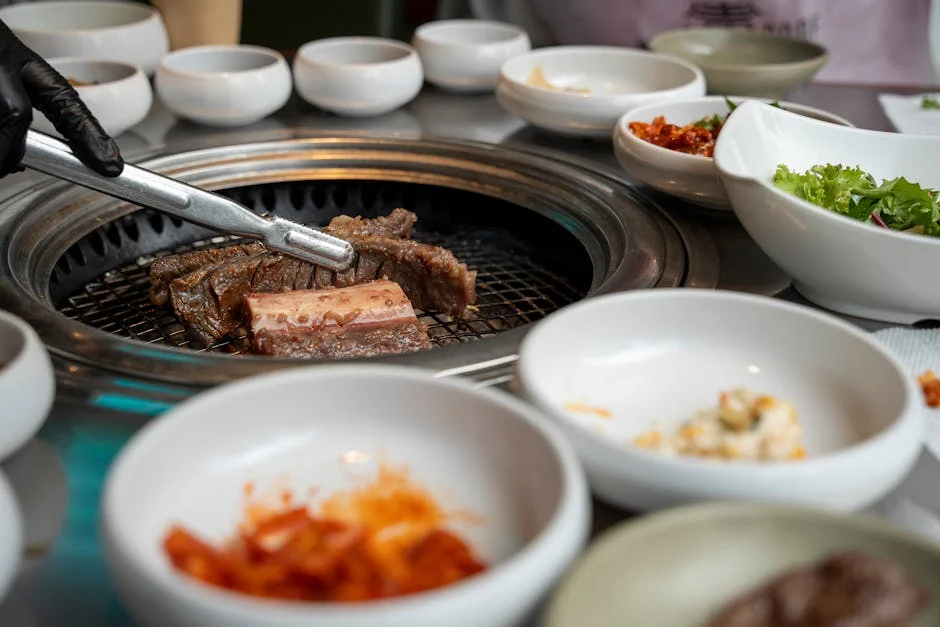
Featured A — Wooraeok, the 1946 Pyongyang-origin institution
Wooraeok is the oldest entry on this list and the establishment most clearly defined by institutional weight. The restaurant opened in 1946 as a Pyongyang-origin kitchen relocated to Seoul after the partition, and it has occupied its current site on Changgyeonggung-ro — north of Euljiro, in Jung-gu — for the bulk of the post-war period. The dish that anchors the kitchen is bulgogi, served the original Pyongyang way: thinly sliced beef, lightly seasoned with pear-juice marinade, grilled by the diner on a domed brass plate that allows the juices to collect in the moat around the edge for spooning over rice. The room also runs an exceptional naengmyeon — the cold buckwheat noodle in clear broth — that is the dish many Seoul regulars order in parallel, and which earned the establishment its Michelin Bib Gourmand listing for multiple consecutive years. The room is quietly serious. Wooden booths, well-spaced tables, an unhurried clientele of regulars, the staff in starched uniforms with the institutional efficiency of a kitchen that has refined the same service for nearly eight decades. The dining room reads, to a Japanese visitor, as the Seoul equivalent of an Edo-period unagi specialist in Ueno — same calibre of institution, same continuity of practice, same quiet pride. The menu is short. The bulgogi is the headline; the naengmyeon is the parallel; the side dishes are minimal and excellent. Pricing sits at thirty thousand to sixty thousand won per person — roughly three to six thousand yen — and the room is open eleven-thirty to twenty-one-hundred with a break from fifteen-hundred to seventeen-hundred, closed Mondays. The English menu is competent; staff who speak conversational English are reliably on the floor. The kitchen takes reservations, and on weekday evenings advance booking by one to two days is sufficient; weekends and major Korean holidays require a week. Address: 62-29 Changgyeonggung-ro, Jung-gu, Seoul. Documented in Michelin Guide Korea, VisitSeoul, and Time Out Seoul. For a first-time Japanese visitor to Korean BBQ, this is the entry I would book on the first evening.
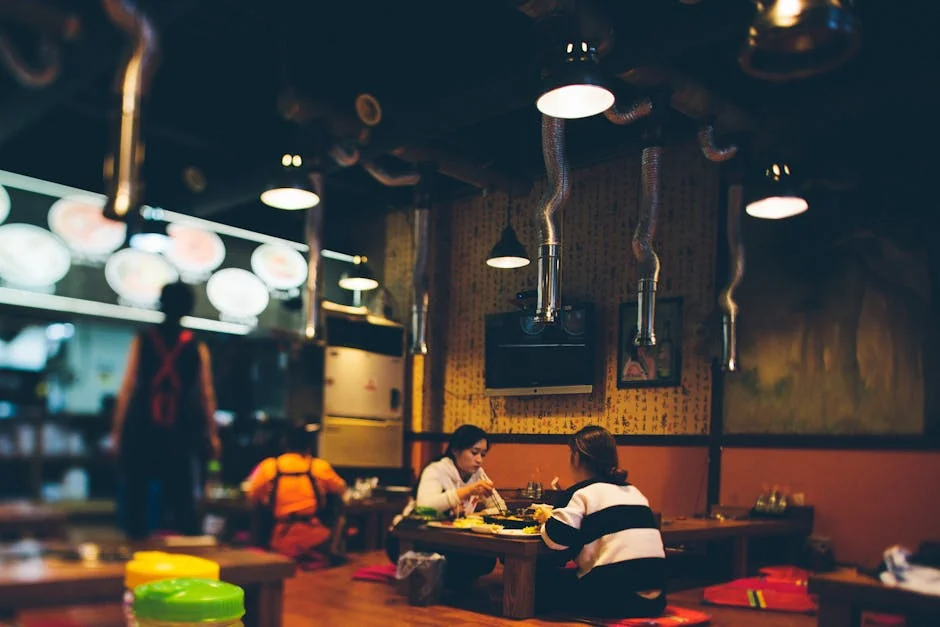
Featured B — Born & Bred, the butcher-led Euljiro flagship
Born & Bred is the contemporary opposite of Wooraeok — a butcher-led, aged-beef room opened by Kim Tae-pyung, an internationally profiled Korean butcher whose work has been covered across Eater, Tatler Asia, and the major Korean lifestyle press. The kitchen sits in the Euljiro 3-ga area, two subway stops north of Myeongdong, and operates as a small, deliberate counter where the proposition is the single piece of meat rather than the volume order. The cuts arrive carved from primal cuts that have been dry-aged on the premises for thirty days or longer, and the kitchen serves them in a sequence — typically chuck flap or hanger first, ribeye cap or sirloin second, an aged short-rib cut to close — that resembles a tasting menu more than a Korean BBQ order. The grilling is done at the table by the staff rather than the diner, which is a small but pointed departure from the conventional Korean format and one that suits the calibre of the meat. The presentation is restrained. The cuts arrive on cedar boards with a measured pinch of finishing salt and small accompaniments — a single oyster mushroom, a fold of aged kimchi, a clean rice bowl — and the staff explain the cut and the aging window before the grilling begins. The room is small, perhaps thirty seats, with timber finishes and well-considered lighting. Pricing is at the high end of this list — eighty thousand to two hundred thousand won per person, roughly eight to twenty thousand yen — and the dinner sitting runs from seventeen-hundred to twenty-three-hundred, with the last order at twenty-two-hundred. Reservations are essential and book out several days ahead; the international press attention has compounded local demand. English menu and English-speaking staff are competent. Address: Euljiro 3-ga area, Jung-gu, Seoul. Documented in Eater, Tatler Asia, and Time Out Seoul. To a Japanese visitor accustomed to the calibre of kuroge wagyu counters in Ginza, this is the closest Seoul equivalent in technical seriousness, though the cuts and aging philosophy are distinctly Korean.
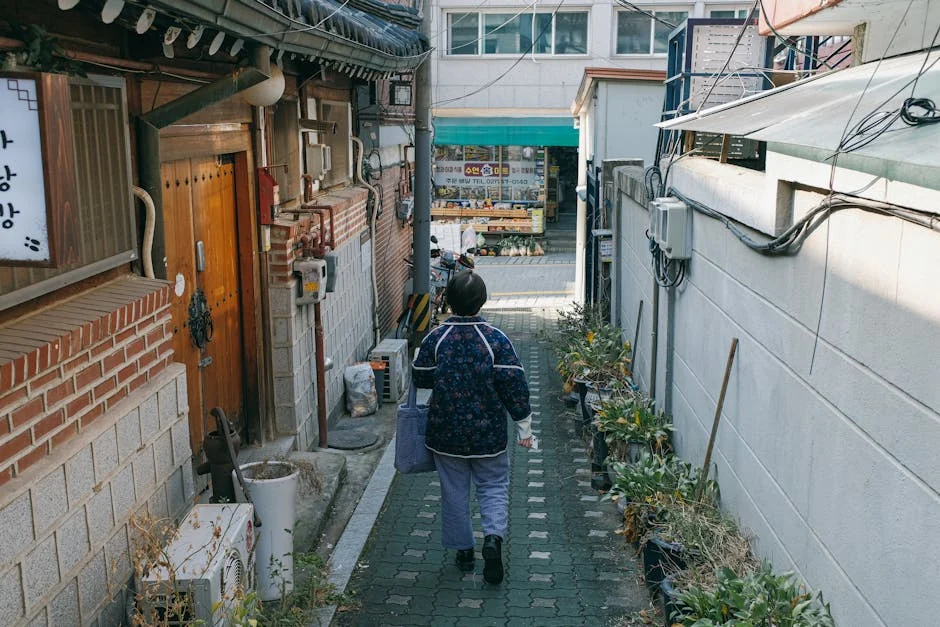
Featured C — Mongtan, the wood-fired Hannam contemporary
Mongtan is the entry on this list most clearly defined by its grilling method. The kitchen, in the Hannam-Itaewon corridor a short Line 4 ride from Myeongdong, specialises in wood-fired Korean BBQ — woogeori (beef brisket cut) and woo-samgyeop (beef belly), grilled over hardwood embers rather than the more conventional charcoal or gas — and has become, across the past several years, one of the defining contemporary Seoul BBQ destinations. The proposition is straightforward. The wood imparts a subtle smoke that the charcoal-grilled rooms do not produce, and the cuts the kitchen selects are leaner than the conventional samgyeopsal and rewarded more by the smoke than a higher-fat cut would be. The grilling is done at the table by the staff, who manage the embers with practiced confidence and rotate the cuts at the precise interval that the cooking demands. Mongtan is also notable for its banchan calibration — fewer side dishes than the conventional Korean BBQ room, each more deliberate, with a fermented-cabbage variant and a single-herb wrap-leaf assortment that read as carefully chosen rather than default. The room is medium-sized — perhaps seventy seats — and the atmosphere is warmer than at Born & Bred but more refined than at the institutional rooms. Pricing sits at sixty thousand to one hundred twenty thousand won per person — six to twelve thousand yen — and the kitchen operates reservation-only, with bookings running typically two to three weeks in advance for weekend evenings. The dinner sitting is seventeen-hundred to twenty-three-hundred. English menu and English-speaking staff are reliable. Address: Yongsan-gu, Seoul, in the Hannam–Itaewon area. Documented in Eater Seoul, Tatler Asia, and Time Out Seoul. To a Japanese reader the closest reference is the wood-grilled sumibiyaki tradition of contemporary Tokyo, though Mongtan's register is distinctly Korean in cut and accompaniment. For a Japanese visitor staying at a Myeongdong hotel, the subway ride to Itaewon takes approximately fifteen minutes; the dinner is worth the trip.
Featured D — Geumdwaeji Sikdang, the thick-cut samgyeopsal reference
Geumdwaeji Sikdang is the entry on this list most clearly associated with samgyeopsal — the thick-cut pork belly that is, for many Korean diners, the canonical Korean BBQ. The restaurant occupies a small storefront in Sindang-dong, one subway stop east of Euljiro on Line 2 or Line 6, and has become one of the most internationally documented Korean pork BBQ destinations across the past decade. The proposition is simple and well-executed. Pork belly is sourced from selected farms, cut thicker than the standard restaurant samgyeopsal (about three centimetres rather than the typical one), grilled by the diner at the table on cast-iron grills heated by gas with charcoal supplements, and served with a banchan spread that reads as more attentive than at the typical pork-BBQ room. The thickness of the cut is the technical point. Conventional samgyeopsal grills quickly and is consumed in a matter of minutes; the thicker Geumdwaeji cut takes longer to cook through, develops a more pronounced surface render, and rewards a slower eating pace. The pairing with the kitchen's house-made ssamjang — a fermented soybean and chilli paste that has been adjusted to the cut — is the small detail that the international press has consistently noted. The room is mid-size and energetic; the queue at peak hours can be substantial. Pricing is reasonable for the quality at twenty thousand to forty thousand won per person — two to four thousand yen — and the kitchen operates eleven-thirty to twenty-three-hundred daily. English menu is competent; staff English is functional rather than fluent. Reservations are not accepted; walk-in waits at peak times run to forty-five minutes on weekend evenings. Address: Sindang-dong, Jung-gu, Seoul. Documented in Eater, CNN Travel, and VisitSeoul. To a Japanese visitor familiar with thick-cut kakuni pork preparations the cut philosophy will read as immediately recognisable, though the grilling format and the ssam tradition are distinctly Korean.
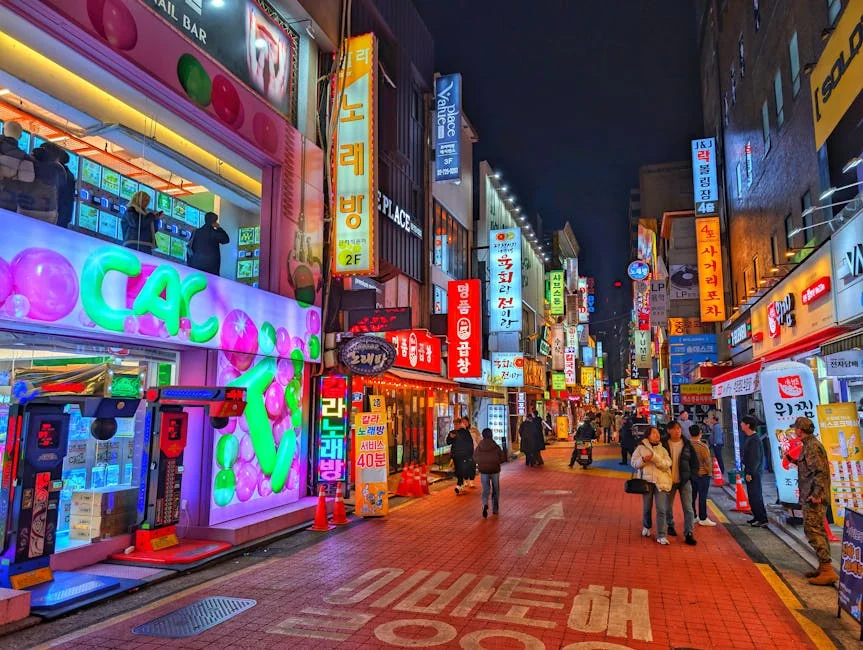
Featured E — Saebyeokjip, the 24-hour late-night reference
Saebyeokjip is the entry on this list for the visitor who has arrived late, missed dinner, or simply wants to extend the evening past the closing time of the more institutional rooms. The Gangnam flagship — reachable from Myeongdong by Line 4 or Line 2, approximately twenty-five minutes by subway — has operated as a twenty-four-hour Korean BBQ and seonjiguk (clotted-blood soup) specialist for many years, and is widely cited in international travel media as the default late-night Seoul Korean BBQ option. The proposition is unfussy. The kitchen serves a complete Korean BBQ menu around the clock — galbi, samgyeopsal, hanwoo beef cuts — with the standard banchan spread, and pairs the BBQ option with the seonjiguk tradition that has historically served Seoul as a recovery dish after a late evening. The room is large and energetic. The clientele at three in the morning skews toward Seoul night-shift workers, late-night travellers, and the occasional film crew. The service moves quickly; the kitchen does not slow at night. Pricing sits at thirty thousand to sixty thousand won per person — three to six thousand yen — and the menu is consistent across the day-and-night cycle. English menu is functional; staff English is basic but sufficient. No reservations; walk-in only, which suits the late-night brief. Address: Gangnam-gu, Seoul, subway-accessible from Myeongdong on Line 4 (transfer at Chungmuro to Line 3, then to Line 2 at Euljiro 3-ga) or by direct taxi in approximately thirty minutes. Documented in Time Out Seoul and VisitSeoul. To a Japanese visitor familiar with the 24-hour gyudon tradition of Tokyo, the format will read as immediately understandable, though the Korean version is more substantial in cut and more communal in service. For a Japanese-speaking visitor arriving at Incheon Airport on the last flight, this is the room I would direct toward.
Featured F — Yeoksam Daewangsutbul Galbi, the charcoal-grill institution
Yeoksam Daewangsutbul Galbi is the entry on this list most clearly associated with charcoal-grilled galbi — the marinated beef short rib that is, alongside samgyeopsal, the canonical Korean BBQ format. The restaurant sits in Yeoksam, Gangnam-gu, reachable from Myeongdong on Line 4 with a single transfer or by direct taxi in about twenty minutes, and operates as one of the central Seoul charcoal-grill institutions widely cited in Korea Tourism Organization and VisitSeoul materials. The proposition centres on the marinade and the charcoal. The galbi here is butterflied, marinated for the kitchen's documented number of hours (typically eight to twelve) in a pear-juice, soy, garlic, and sesame mixture, and grilled at the table over genuine charcoal rather than the gas-with-charcoal-chip compromise that many central-Seoul rooms now use. The result is a more pronounced smoke and a slightly different sugar caramelisation on the surface, both of which the marinade is calibrated for. The cut itself is generous and easy to eat. The kitchen serves the marinated rib alongside an unmarinated saeng-galbi option for diners who prefer to taste the unseasoned meat against the marinated version, and the contrast is a small piece of culinary education that the room offers without theatre. Pricing sits at thirty thousand to fifty thousand won per person — three to five thousand yen — and the room is open twelve-hundred to twenty-four-hundred daily. English menu is competent; staff English is functional. Reservations recommended on weekends; weekdays accept walk-ins. Address: Yeoksam, Gangnam-gu, subway-accessible from Myeongdong on Line 4 / Line 2 transfer. Documented in Korea Tourism Organization and VisitSeoul materials. To a Japanese visitor familiar with the charcoal-grilled register of Tokyo yakiniku the format will be immediately legible, and the marinade — sweeter and more aromatic than its Japanese cousin — is the principal point of difference. For an evening that combines a Myeongdong-area hotel and a return to base by midnight, this is the right pick.
Featured G — Mugyodong Bugeokukjip, the adjacent old-Seoul kitchen
Mugyodong Bugeokukjip is the entry on this list that bends the Korean BBQ category slightly, and which I include for the visitor whose Myeongdong evening might begin with grilled meat but resolve, at the morning end, with the kind of clear-broth restorative dish that older Seoul has refined over generations. The restaurant sits in Mugyo-dong, near City Hall, within walking distance of central Myeongdong, and has operated as a long-running pollock-soup specialist since the mid-twentieth century. The proposition is the dish itself. Bugeoguk is a clear broth of dried Alaskan pollock — the fish flaked into the bowl, the broth thin and golden, finished with chopped scallion and a measure of egg drop — and is, in the older Seoul tradition, the morning-after dish that follows an evening of grilled meat and the inevitable measure of soju. The kitchen serves it in a single configuration with a small array of side dishes — radish kimchi, seasoned seaweed, a clean rice bowl — and the dish is on the menu from seven in the morning. The room is unpretentious. Long communal tables, the staff matronly and unhurried, the air carrying the deep marine note of slow-simmered pollock stock. Pricing is the most modest on this list — nine thousand to twelve thousand won per person, roughly nine hundred to twelve hundred yen — and the room is open seven-hundred to twenty-hundred daily. English menu is functional; staff English is basic. No reservations; walk-in only. Address: Mugyo-dong, Jung-gu, Seoul, near City Hall, fifteen minutes on foot from central Myeongdong. Documented in Korea Tourism Organization and VisitSeoul. To a Japanese reader the closest cultural reference is the morning shijimi miso soup tradition of Hokkaido — same clarifying broth philosophy, same restorative register — though the Korean pollock version is more substantial and more clearly positioned as an after-meat recovery. For a visitor planning a Myeongdong evening that includes a heavier Korean BBQ dinner the night before, breakfast here is the appropriate closing piece of the cultural sequence.
Comparison at a glance
The table below summarises the seven entries on a small set of practical attributes a visiting reader is likely to weigh — the cut or category, the typical per-person price in won with approximate yen equivalent, the subway access from Myeongdong, the reservation practice, and a notional language support note. None of these are formal ratings; all are editorial impressions captured across the four-week visiting window.
| Featured | Restaurant | Cut / category | Price (KRW) | Price (JPY approx.) | Subway from Myeongdong | Reservation | Language |
|---|---|---|---|---|---|---|---|
| A | Wooraeok | Bulgogi, naengmyeon (Pyongyang-origin) | ₩30,000-60,000 | ¥3,000-6,000 | Line 4 + walk, 15 min | 1-2 days advance | EN menu, EN staff |
| B | Born & Bred | Aged beef, butcher-led | ₩80,000-200,000 | ¥8,000-20,000 | Line 2 to Euljiro 3-ga, 10 min | Essential, days ahead | EN menu, EN staff |
| C | Mongtan | Wood-fired beef brisket and belly | ₩60,000-120,000 | ¥6,000-12,000 | Line 4, 15-20 min | Reservation only | EN menu, EN staff |
| D | Geumdwaeji Sikdang | Thick-cut samgyeopsal | ₩20,000-40,000 | ¥2,000-4,000 | Line 2 or 6, 15 min | Walk-in only | EN menu, basic EN staff |
| E | Saebyeokjip (Gangnam) | 24-hour BBQ and seonjiguk | ₩30,000-60,000 | ¥3,000-6,000 | Line 4 + Line 2, 25 min | Walk-in only | EN menu, basic EN staff |
| F | Yeoksam Daewangsutbul Galbi | Charcoal-grilled galbi | ₩30,000-50,000 | ¥3,000-5,000 | Line 4 + Line 2, 20 min | Recommended weekends | EN menu, functional EN |
| G | Mugyodong Bugeokukjip | Pollock soup, BBQ-adjacent breakfast | ₩9,000-12,000 | ¥900-1,200 | Walk, 15 min | Walk-in only | EN menu, basic EN |
How to plan an evening from a Myeongdong hotel
A pragmatic note for the visitor planning the evening rather than the article. The institutional rooms — Wooraeok, Yeoksam Daewangsutbul Galbi — open from late morning and operate through to twenty-one-hundred or twenty-four-hundred respectively; they suit a more conventional dinner sitting that begins at eighteen-hundred or nineteen-hundred. The contemporary destinations — Born & Bred, Mongtan — are dinner-only and book several days to several weeks ahead; the Tuesday-or-Wednesday evening sitting books most easily. Geumdwaeji Sikdang is reliably available on weekday evenings with a thirty-to-forty-minute walk-in wait; weekend evenings extend the wait significantly. Saebyeokjip suits the late-arrival or post-midnight brief and is the right room for a visitor whose evening would otherwise end at a hotel restaurant. Mugyodong Bugeokukjip is the breakfast-and-recovery closer rather than the dinner room. For a single-night visitor making one choice, I would recommend Wooraeok for a first-time Japanese visitor wanting institutional Korean BBQ at moderate cost. For a three-night visitor the natural sequence is Wooraeok on night one, Mongtan or Geumdwaeji Sikdang on night two, Born & Bred on night three. The subway journeys from Myeongdong are short — most of the entries on this list sit within twenty minutes of Myeongdong Station by Line 4 or Line 2 — and a taxi from any central Myeongdong hotel reaches the further Gangnam entries in twenty to thirty minutes depending on traffic. Cash and card are accepted at all seven establishments; Alipay and WeChat Pay are accepted at the larger and more contemporary rooms. Tipping is not expected at any of the seven.
Frequently asked
Six common questions from Japanese and other visiting diners.
“Korean BBQ reads, to anyone who has spent an evening at a yakiniku-ya in Osaka or Yokohama, as a recognisable cousin of a known evening — but the cuts are larger, the seasoning more restrained, the ssam tradition entirely Korean.”
Saki Watanabe, Myeongdong notebook
Frequently asked questions
Do I need to make a reservation in advance for Korean BBQ in Myeongdong?
It depends on the establishment. The institutional rooms (Wooraeok) and the contemporary destinations (Born & Bred, Mongtan) require advance booking — one to two days for the former and several days to several weeks for the latter. The pork specialists (Geumdwaeji Sikdang) and the late-night option (Saebyeokjip) operate walk-in only. The comparison table above notes the reservation practice for each entry.
How much should I budget per person for a Korean BBQ dinner?
The range across the seven entries on this list is wide. The modest end — Geumdwaeji Sikdang, Mugyodong Bugeokukjip — runs nine thousand to forty thousand won per person, or roughly one thousand to four thousand yen. The mid-range — Wooraeok, Yeoksam Daewangsutbul Galbi, Saebyeokjip — sits at thirty thousand to sixty thousand won, three to six thousand yen. The premium end — Born & Bred, Mongtan — runs sixty thousand to two hundred thousand won, six to twenty thousand yen. For a typical evening at a moderately priced room, fifty thousand won per person is a workable budget.
Are the menus available in Japanese or English?
All seven establishments on this list maintain functional English menus, and the contemporary destinations — Born & Bred, Mongtan, Wooraeok — keep English-speaking staff reliably on the floor. Japanese-language menus are less consistent; the more international rooms will provide one on request, but the older institutions operate primarily in Korean and English. A translation app handles the gap at most rooms without difficulty.
What is the difference between samgyeopsal, galbi, and bulgogi?
Samgyeopsal is pork belly, typically cut in thicker slices and grilled unmarinated at the table — Geumdwaeji Sikdang's specialty. Galbi is beef short rib, usually butterflied and marinated in a pear-juice and soy mixture — Yeoksam Daewangsutbul Galbi's reference dish. Bulgogi is thinly sliced beef, lightly marinated, served traditionally on a domed brass plate where the meat cooks quickly and the juices collect for spooning over rice — Wooraeok's anchor preparation.
Is Korean BBQ very different from Japanese yakiniku?
The format is recognisably similar — a tabletop grill, communal grilling, meat served alongside accompaniments — and a Japanese visitor will find the experience immediately legible. The differences are in cut philosophy (Korean cuts are larger), seasoning register (Korean marinades are sweeter and more garlic-forward), and accompaniment tradition (the Korean ssam — wrapping the meat in a leaf with garlic, rice, and fermented paste — is distinctively Korean). The grilling fuel also differs at the higher-end rooms; Mongtan's wood-firing has no widespread Japanese analogue at the same scale.
Are there late-night Korean BBQ options near Myeongdong?
Saebyeokjip in Gangnam is the most reliable twenty-four-hour Korean BBQ destination reachable from Myeongdong, and is widely recommended in international travel press for late-arriving visitors. Yeoksam Daewangsutbul Galbi runs until twenty-four-hundred and is closer in subway distance. The institutional rooms in central Jung-gu close earlier — most by twenty-one-hundred — so the late-night brief requires the Gangnam-area options.